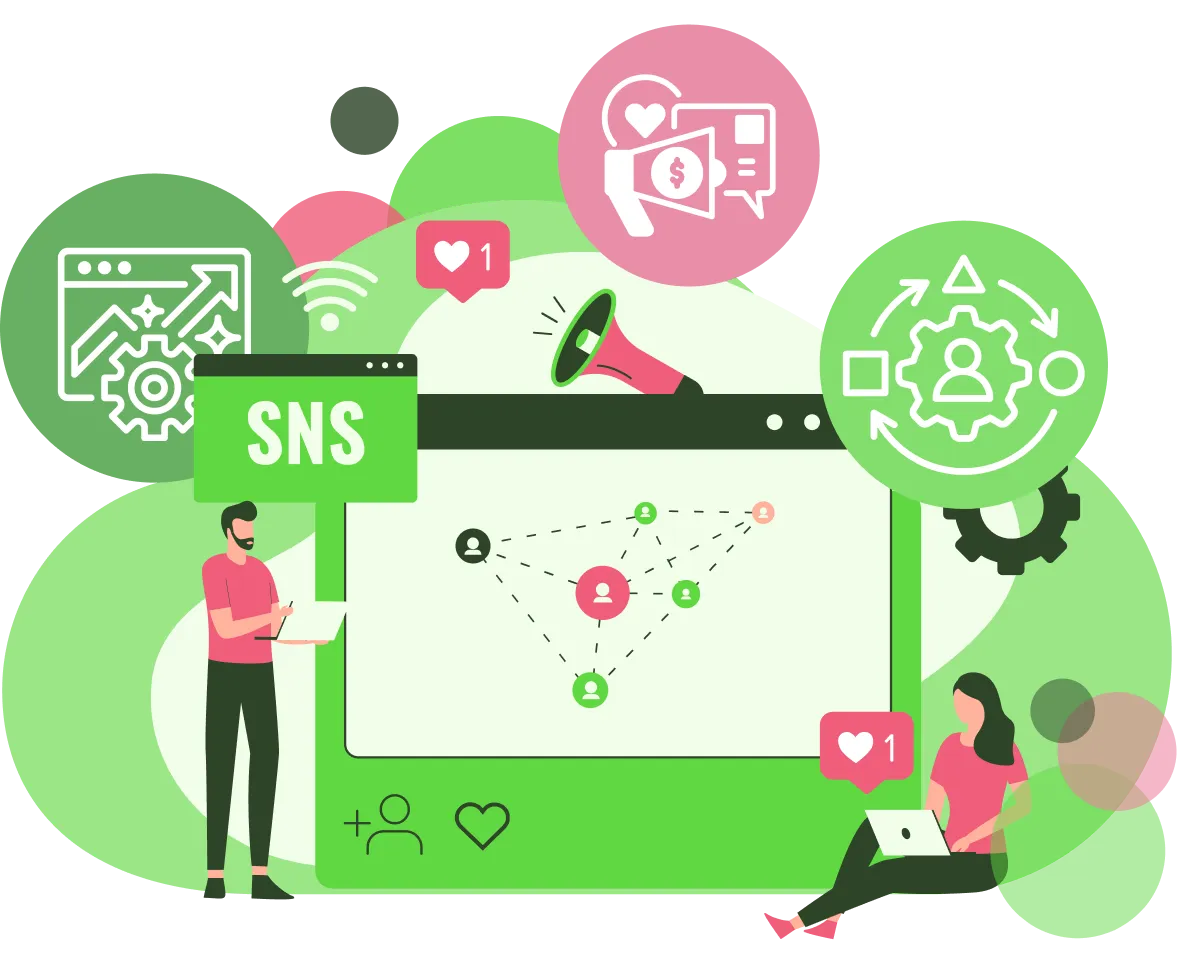







Ad Management for a Shopping Mall
Managing Instagram and LINE ad campaigns to drive over 17 million impressions and boost seasonal sale awareness for a major shopping mall in Osaka.


Japan isn’t just another market—it’s a digitally mature, culturally nuanced, and highly mobile-driven society. While the platforms may look familiar—LINE, Instagram, X (formerly Twitter), TikTok—how they’re used, what content performs well, and how people engage are entirely different from the West. This guide is designed for global companies that want to succeed in Japan, not by copy-pasting what works elsewhere, but by embracing what makes this market truly unique.
Whether you're a B2B firm eyeing LinkedIn alternatives or a B2C brand aiming to go viral on LINE or TikTok, understanding the landscape is step one. But cultural fluency, strategic localization, and deep audience insight are what truly drive performance here.
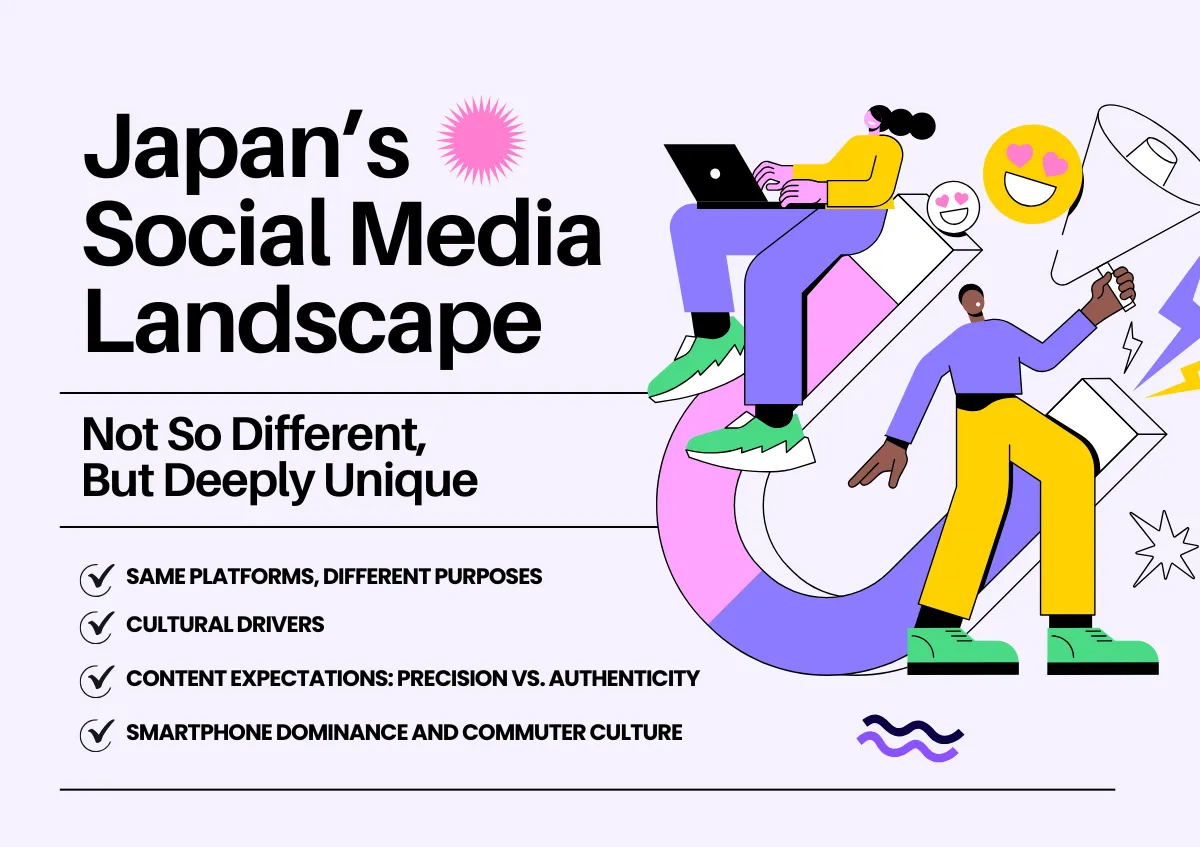
Japan may use the same social platforms as the rest of the world, but how they are used—and why—differs in meaningful ways. International businesses entering the Japanese market must understand not just which platforms dominate but also how user behavior, content expectations, and cultural values shape the social experience.
At first glance, Japan's social media ecosystem looks familiar. Major platforms like LINE, Instagram, X (formerly Twitter), and Facebook are widely used. However, usage patterns diverge sharply from Western markets:
LINE dominates as a messaging app with 84 million users (nearly 70% of the population). But it’s much more than chat—users rely on LINE for payments, news, job searches, and customer service. In Japan, LINE functions more like a digital infrastructure than just a social platform.
X (Twitter), with about 69 million users, plays a central role in real-time updates and anonymous discourse. In contrast to the West, where X's influence is declining, it remains one of the top three platforms in Japan.
Instagram is highly popular among users under 35, driven by visual storytelling, local trend discovery, and aesthetic curation.
Facebook, while declining in the West, retains relevance among older users in Japan, especially business professionals. Unlike the U.S. or Europe—where LinkedIn is the go-to for networking—many Japanese professionals prefer Facebook due to cultural discomfort with disclosing job titles publicly.
Meanwhile, LinkedIn is underutilized, with a user base roughly 1/10 the size of Facebook’s in Japan. Privacy concerns and norms of humility limit its appeal.
Japanese communication style leans toward indirect expression and discretion. This shapes user behavior online:
Anonymity is preferred: Platforms like X allow multiple accounts and pseudonyms, encouraging open expression without personal exposure. This makes them a safe space for airing opinions or participating in public dialogue.
Modesty over self-promotion: Japanese users are generally less comfortable broadcasting professional or personal achievements. This limits the appeal of platforms that center around individual branding or résumé-style profiles, like LinkedIn.
Blended personal-professional boundaries: Platforms like Facebook thrive as hybrid spaces for personal connections and quiet business networking—something culturally aligned with Japan's reserved approach to public engagement.
Japanese audiences tend to value precise, detailed, and practical content:
In contrast, Western users generally prefer content that’s authentic, bold, and personality-driven. A casual tone, humor, memes, behind-the-scenes stories, and influencer-generated content are often more impactful than highly structured posts.
Japan’s digital consumption is overwhelmingly mobile-first. As of 2024, smartphones account for 97% of mobile device usage. Long daily commutes—averaging 80 minutes round-trip—translate to extended mobile screen time.
For businesses, this means mobile-first design is not optional—it's the default.


| Aspect | Japan | The West (Europe/US) |
|---|---|---|
| Top Platforms | LINE, X, Instagram, Facebook | Facebook, Instagram, LinkedIn |
| Professional Networking | Facebook (for older demos) | LinkedIn dominant |
| Messaging App Use | LINE integrates payments, news, e-commerce | Messenger/WhatsApp used separately |
| Content Style | Informative, detailed, theme-focused | Bold, direct, relatable, often humorous |
| Anonymity | Valued (especially on X) | Less common—real identity preferred |
| Device Use | Smartphone-first (97%) | Mixed: smartphone + desktop |
| Commuting Influence | Long commutes = high mobile engagement | More varied by country |
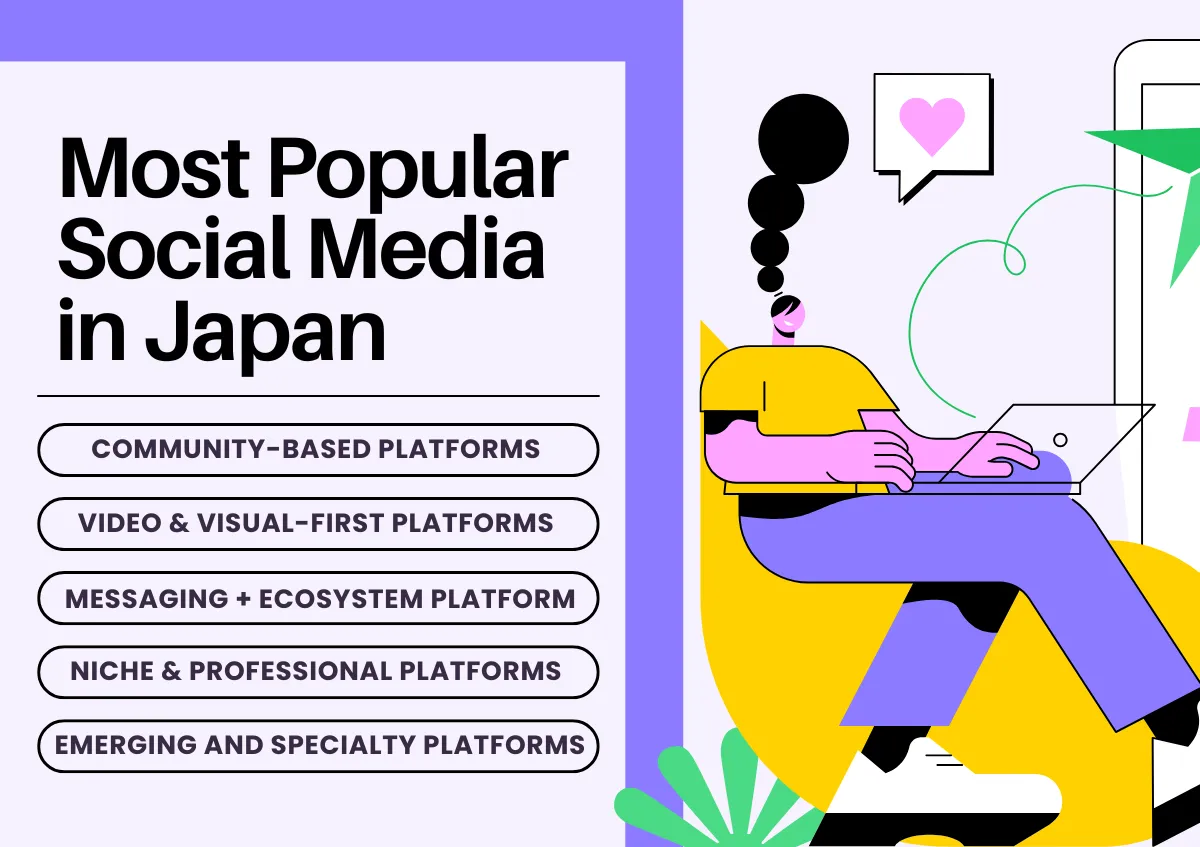
Japan’s social media ecosystem can be best understood by grouping platforms based on how people use them, not just by popularity rankings. Below is a breakdown by function and purpose, with insights to help brands choose the right platforms for engagement.
X (Twitter): Real-Time, Anonymous, and Influential
X is deeply integrated into Japanese online life. Unlike in the West, it outperforms Facebook in Japan. It’s a go-to source for breaking news, opinion-sharing, and public commentary—especially for users who value pseudonymity and fast interactions. Businesses use it to share product updates, engage with viral content, or partner with Japanese influencers to spark attention.
Try working with native speakers to localize tone and understand viral mechanics on Japanese X.
Facebook: Where Japanese Professionals Network
In Japan, Facebook serves a LinkedIn-like function. Professionals, including managers and executives, use it for networking, maintaining client relationships, and participating in industry groups. Its paid ad tools are effective for targeted B2B outreach in sectors where formal credentials matter.
YouTube: Japan’s Streaming Powerhouse
Japanese users treat YouTube like a TV replacement. Content ranges from cooking tutorials to celebrity vlogs, and many families now watch YouTube on smart TVs together. This makes it ideal for both brand building and detailed educational content.
Instagram: Visual Storytelling with Local Flavor
Instagram is essential for discovery-driven content in Japan. Users often search by location or theme (e.g., cafes in Shibuya). Reels and Stories perform well, especially when paired with local influencers.
Provide more detail in captions than you might for Western audiences—Japanese users appreciate information like prices, directions, or menus.

TikTok: Viral Engine for Gen Z
TikTok in Japan continues to grow with both teen creators and brand campaigns. The algorithm rewards creativity and niche targeting, making it a good platform for fashion, food, and lifestyle brands aiming at a younger market.
LINE: More Than Messaging—It’s Infrastructure
LINE is Japan’s digital Swiss Army knife. It's not just for texting—users read news, play games, make payments, and receive promotions. Brands can create Official Accounts to send updates, automate customer service, and even integrate e-commerce. However, brand posting frequency is typically low; chat and push notifications drive most engagement.
Don’t treat LINE like social media—treat it like CRM.
Note: For Monetized Long-Form Content
Individual creators and businesses widely use Note for deep-dive storytelling and audience engagement. With monetization features and a loyal audience, it’s ideal for in-depth content and B2B thought leadership.
Ameblo: Japan’s Original Blogosphere
Still active among lifestyle bloggers and fans of Japanese celebrities, Ameblo is a legacy platform that continues to deliver organic search visibility and credibility in specific niches (e.g., parenting, travel, beauty).
Pinterest: Visual Idea Curation
Pinterest in Japan is still relatively niche but works well in design-heavy verticals. Fashion, home goods, and lifestyle brands use it to position themselves visually.
LinkedIn: Small but Strategic
Though LinkedIn is underused locally, it serves a clear purpose for internationally oriented companies. Japanese users remain cautious about self-promotion, so LinkedIn tends to attract global professionals and startups rather than the domestic mainstream.
BeReal: Gen Z’s Authentic Window
BeReal’s popularity in Japan is driven by its appeal to Gen Z’s desire for real-life moments and social spontaneity. While it’s not yet a brand-friendly platform, it reflects a broader shift toward casual, transparent engagement—something brands can learn from when crafting content elsewhere.
Twitch: The Streaming Hub for Gamers
Twitch thrives in Japan’s gamer-centric content scene, often used for live playthroughs, e-sports, and digital fan engagement.
Threads: Meta’s Text-Focused Contender
Threads has gained early traction among users who seek a lighter, more relaxed alternative to X. Its tight integration with Instagram makes it convenient for brands already using Meta tools. While adoption in Japan is still ramping up, it’s worth watching for cross-platform campaigns and text-first engagement strategies, especially as Meta expands its local footprint.
Japanese users may be active on the same platforms as global audiences, but deep-rooted cultural values shape the way they engage, post, and respond. For international brands entering the market, understanding these subtle—but-powerful differences is key to building credibility and connection.
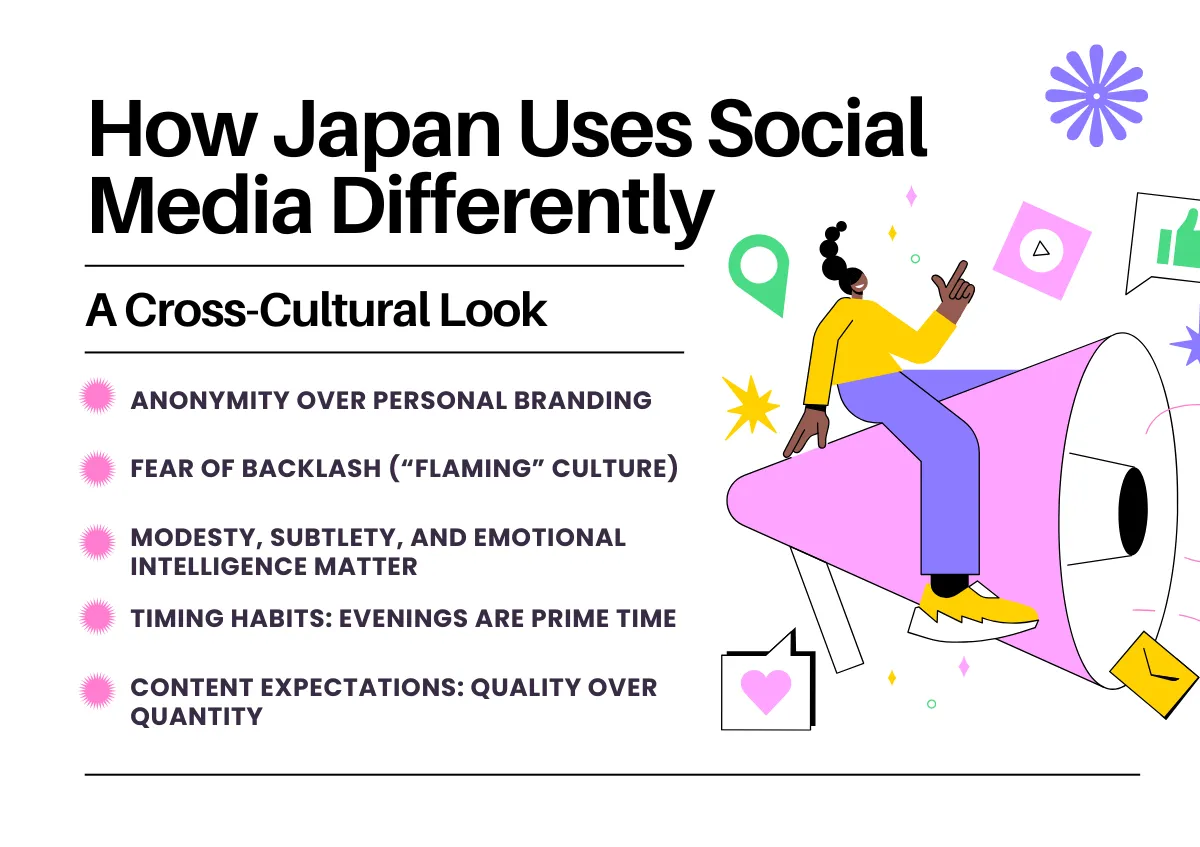
Unlike Western social media cultures that often celebrate personal expression, self-promotion, and "influencer identities," Japanese users generally prefer low-exposure interactions:
For marketers: Don’t push users to engage publicly. Offer low-pressure touchpoints like one-on-one chats (e.g., LINE), polls, or private messaging options.
In Japan, even minor missteps can lead to public backlash (炎上 / enjo). Whether it's tone-deaf humor, an inappropriate emoji, or a poorly translated slogan, the bar for perceived insensitivity is low, and the consequences can be severe.
Always have native content reviewers. A phrase that sounds catchy in English may read as rude, confusing, or even offensive in Japanese.
Japanese culture prizes humility, harmony, and politeness. These values extend into online behavior and content preferences:
For brands: Think respectful teacher, not flashy entertainer. Demonstrate value quietly and confidently.
Unlike some Western audiences, where engagement peaks around midday, Japanese users tend to be most active on social media during weekday evenings:
For marketers: Schedule posts to go live during evening hours, ideally between 7–10 PM, to match peak activity.
Japanese users tend to hold brands to high standards of polish and accuracy. Even user-generated content (UGC) in Japan is often of a higher-than-average quality:
Focus on original, informative, well-designed posts that feel tailored to Japanese tastes. Think small details: colors, fonts, spacing, and even emoji style.
By understanding how Japanese users navigate social media—with caution, subtlety, and cultural sensitivity—brands can create messaging that resonates deeply without alienating audiences. The next step is learning how to apply these insights operationally.

Entering the Japanese market requires more than simply using the same social media playbook that works elsewhere. Local behaviors, high user expectations, and cultural nuances uniquely shape Japan’s digital ecosystem. To succeed, foreign brands must approach social media with a tailored, thoughtful strategy that aligns with Japanese values, platform norms, and user expectations.
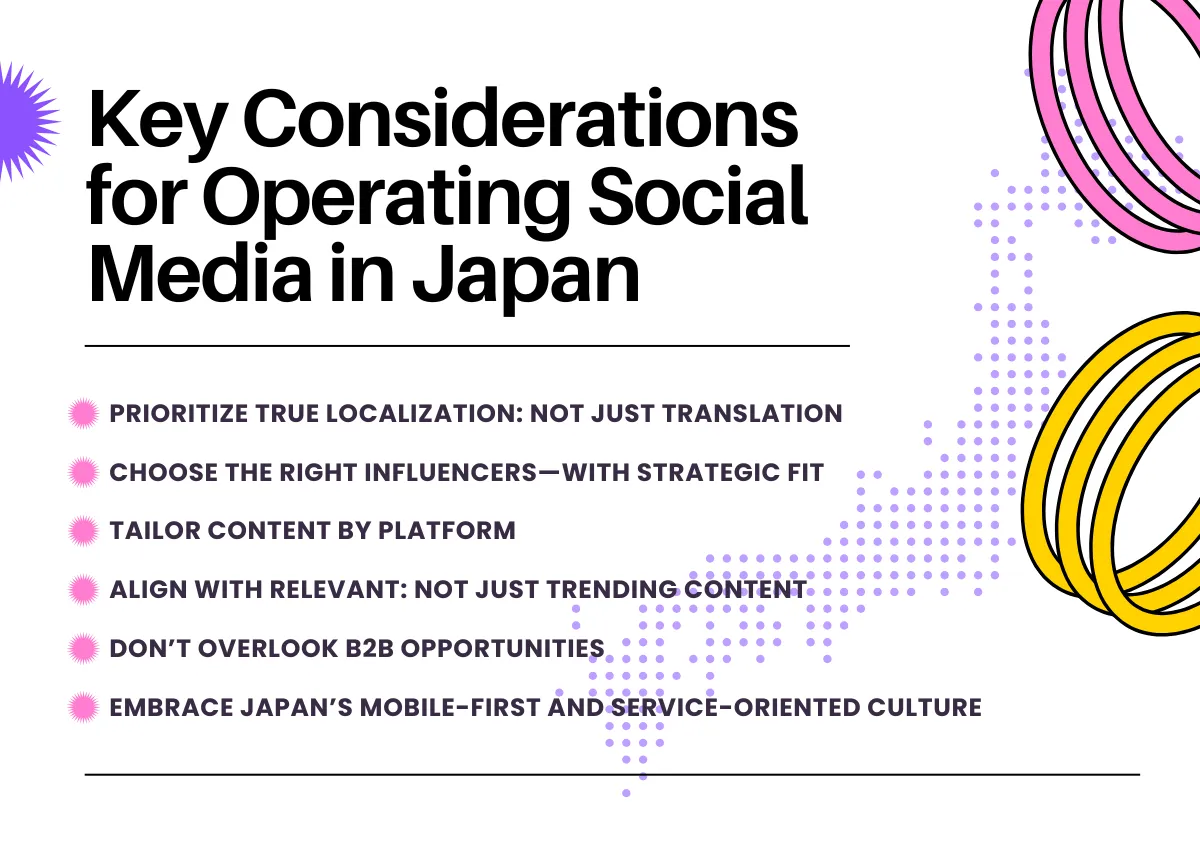
Effective localization in Japan involves more than converting English to Japanese. Content must reflect local tone, etiquette, and social context:
Try working with in-market professionals or trusted agencies to craft culturally appropriate campaigns that build trust.
Influencer marketing is powerful in Japan, but it requires precision. Japanese consumers are highly selective and may quickly disengage if a campaign feels mismatched or inauthentic.
Vet influencers carefully. A poor match can harm brand perception more than help it.

Each platform in Japan serves a different purpose and user mindset. Don’t reuse identical content across platforms—optimize based on the platform’s culture and format:
LINE: Use official accounts for direct communication, push notifications, and customer support. Think of LINE as a CRM, not traditional social media.
Instagram: Prioritize aesthetics, helpful captions, and lifestyle relevance. Consider carousel posts for informative storytelling.
TikTok: Follow local meme formats, sounds, and challenges. Prioritize creativity and subtle product integration.
YouTube: Produce long-form or behind-the-scenes content, product reviews, or tutorials in Japanese. Consider family-friendly, informative storytelling.
X (Twitter): Share timely news, trending hashtags, and product drops. Humor and wit are effective, but must remain culturally sensitive.
Japanese users favor visual clarity, clean formatting, and informative detail—even in casual formats like Stories or Reels.
Viral trends come and go, but not every trend is a good fit for your brand. In Japan, it’s more effective to focus on relevance and consistency than to chase short-lived visibility.
Japanese users value brands that feel stable, consistent, and community-oriented, not opportunistic.
Japan’s social media isn’t just for B2C—B2B brands can build authority and generate leads across select platforms:
Facebook: Still popular among professionals aged 30–50, making it an effective space for B2B content, thought leadership, and paid ads.
X (Twitter): Great for sharing industry insights, updates, and engaging with local business figures or media.
LinkedIn: Smaller but highly valuable for international companies or bilingual professionals. Use it to establish expertise and build relationships.
Instagram: Useful for behind-the-scenes storytelling or showcasing design, culture, or sustainability efforts in a visually engaging format.
B2B brands should focus on trust-building, education, and long-term visibility, not quick conversions.
Japan is one of the most mobile-centric countries in the world. Social media users typically browse on smartphones during their evening downtime, often after work or while commuting.
Additionally, Japanese consumers have high expectations for service. Responding to messages, comments, or inquiries politely and promptly is essential.
| Action | Why It Matters |
|---|---|
| Invest in Cultural Expertise | Hire local specialists or agencies to navigate tone, etiquette, and consumer expectations. |
| Audit Platform Fit | Focus on LINE, Instagram, and X—not just global default platforms. |
| Monitor Local Trends | Japanese trends often evolve independently. Stay tuned via Japanese news, hashtags, and creators. |
| Respect User Behavior | Avoid pushing public interactions; focus on DM, one-on-one, or opt-in engagement styles. |
By aligning with Japan’s digital habits, communication norms, and expectations for quality, your brand can earn long-term loyalty in a market that values trust, service, and cultural fit above all. The payoff is worth the investment: Japan’s users are engaged, mobile-savvy, and intensely loyal once that connection is earned.
As we look toward 2025, Japan's social media landscape is not just evolving—it’s diversifying. New technologies, shifting user behaviors, and cultural trends are creating fresh opportunities for brands willing to adapt. Here are the key trends to watch if you want to stay relevant in Japan’s digital space.
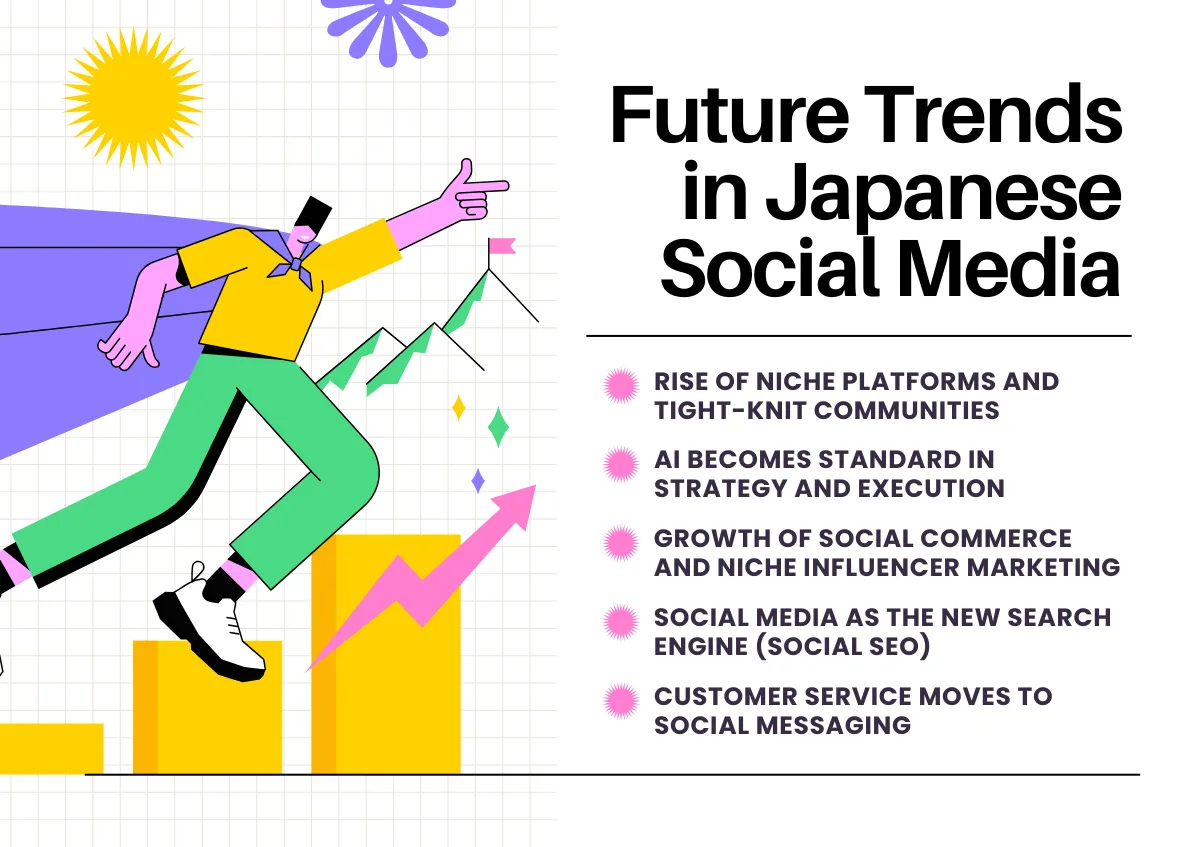
Japanese users—especially Gen Z—are increasingly spending time in smaller, interest-based communities rather than just large, mainstream platforms. Platforms like BeReal, Threads, Discord, and Bluesky are gaining traction by offering more intimate or purpose-driven experiences.
This trend reflects the rise of “oshi culture,” where users form fan communities around hobbies, characters, or influencers. These groups are highly engaged and loyal, creating opportunities for hyper-targeted marketing.
What it means for brands: Identify and engage with micro-communities that align with your niche. Collaboration with smaller creators inside these fandoms can generate stronger trust than mass-market campaigns.
AI-powered tools are no longer optional—they’re becoming core to content planning, execution, and analytics in Japan. From chatbots to AI-generated content and trend forecasting, these tools are helping businesses operate more efficiently and with greater precision.
Japan is also seeing the rise of virtual influencers, such as the AI-generated model Imma, who blur the line between tech and entertainment. These digital figures are being used in branding, PR, and even customer-facing roles.
What it means for brands: Embrace AI to streamline your workflows, enhance personalization, and experiment with tech-integrated marketing tactics that stand out.
Social commerce continues to surge in Japan, as users not only browse but also shop directly through apps like Instagram, TikTok, and LINE. Features like in-app stores, live product demos, and one-click purchases are increasingly common.
Influencers remain critical to this model, but the focus is shifting to smaller, topic-specific creators who offer relatability and trust over sheer follower numbers.
What it means for brands: Make your products shoppable within platforms. Collaborate with local micro-influencers and use interactive content (like live demos) to drive conversion.
More Japanese users are searching within social platforms for news, reviews, and recommendations—especially on TikTok and Instagram—rather than turning to Google.
This shift means that traditional SEO strategies need to evolve into Social SEO, where content is optimized for discovery inside apps via hashtags, keywords, and shareable formats.
What it means for brands: Use relevant Japanese hashtags, keywords, and captions to improve discoverability. Ensure your content addresses common questions and aligns with search behaviors on each platform.
Following the pandemic, many brands in Japan have shifted customer service to direct messages (DMs) on platforms like LINE and Instagram. These channels offer users convenience, speed, and privacy, often preferred over call centers or emails.
There's also a growing preference for private brand interactions, as users move away from public commenting or posting.
What it means for brands: Develop clear customer support systems within social platforms. Use chatbots for common questions, but ensure personal follow-ups for meaningful interaction and loyalty-building.

Operating social media in Japan requires more than checking off the usual boxes. It demands a deep respect for cultural nuance, an agile strategy tailored to user behaviors, and a commitment to real localization, not just translated captions.
The payoff? A highly engaged, loyal audience that rewards brands who take the time to “get it right.” By aligning with Japan’s unique social media habits—from timing and tone to platform and privacy—you position your brand not just to launch, but to thrive in one of the most competitive digital markets in the world.
Same Platforms, Different Rules: Japan uses many of the same social platforms as the West, but with different expectations—LINE is a CRM channel, not a typical messenger; Facebook is used for B2B networking more than LinkedIn.
Anonymity & Indirectness Rule: Japanese users prefer subtle messaging, anonymous expression, and low-pressure interactions. Avoid pushing public engagement and focus on respectful communication.
Quality > Quantity: Japanese users have a high bar for visual polish and accurate content. Casual, sloppy posts or direct translations will fail to connect.
Localization is Non-Negotiable: Culturally relevant, event-driven, and seasonally timed content builds trust. Campaigns must reflect the tone and etiquette of Japanese social culture.
Social Commerce & Micro-Influencers Are Rising: Especially with younger users, discoverability and purchasing now happen within social platforms. Smaller, trusted creators often drive better ROI than prominent influencers.
Mobile-First, Evening Engagement: Smartphone usage dominates, with peak activity from 7–10 PM. Prioritize fast-loading, vertical-friendly, mobile content.
At IGNITE, we specialize in turning global ambition into local success.
As a multilingual team of digital marketing professionals based in Osaka, we help international brands navigate Japan’s complex media landscape with confidence. From campaign localization and influencer outreach to content creation and CRM integration on LINE, we offer full-service solutions backed by market data, cultural fluency, and performance expertise.
We don't just support your marketing—we become an extension of your team. Whether you're launching your first campaign in Japan or looking to optimize an existing presence, let IGNITE be your trusted partner in Japan.
Get in touch today and let’s IGNITE your growth in Japan.
Project manager leading Japanese content initiatives across SEO, social media, and creative production. Leads teams and collaborates with clients to deliver content projects.
Managing Instagram and LINE ad campaigns to drive over 17 million impressions and boost seasonal sale awareness for a major shopping mall in Osaka.

Growing brand visibility and job seeker sign-ups for an international IT recruitment agency in Japan through strategic LinkedIn content and data-driven engagement.

Boosting global engagement and followers for a cryptocurrency brand by managing targeted Twitter campaigns and promoting NFTs and token content in Japan.

Boosting a global pump manufacturer's social media following by 3,800% through targeted content and audience engagement strategies on Facebook for their Japan subsidiary.
Find the right service to grow your business in Japan.