
EC Sales Support for Supplements
Managing Instagram marketing to boost awareness and sales for a supplement brand through daily content, influencer outreach, and engagement campaigns.


Japan’s e-commerce market is unlike any other, where cutting-edge technology meets deep-rooted cultural traditions and where customer expectations are set to exacting standards. At the center of this landscape is Rakuten, a platform that has shaped online shopping in Japan for more than two decades. For international brands, it’s not just a sales channel—it’s a gateway into a loyalty-driven, brand-conscious market with enormous growth potential. In this guide, we’ll break down Rakuten’s unique ecosystem, uncover the strategies that work best, and show you how to navigate Japan’s competitive digital marketplace with confidence.
For more than two decades, Rakuten has shaped the way Japan shops online. What began as a small online marketplace in the late 1990s has evolved into a vast digital ecosystem that touches almost every aspect of Japanese consumers’ daily lives, from buying groceries and booking travel to paying bills and earning loyalty rewards.
Understanding how Rakuten grew from a domestic startup to a market leader is essential for international companies looking to enter Japan. Its history reveals why it remains such a trusted brand, while its current market position shows the scale of opportunity it offers to sellers.
Rakuten was founded in 1997 by Hiroshi Mikitani as MDM, Inc., with a simple but ambitious mission: empower Japan’s small and medium-sized merchants to sell online. Its flagship marketplace, Rakuten Ichiba, quickly stood out for its user-friendly approach and merchant-first philosophy, giving sellers complete control over their storefronts, something rare in e-commerce at the time.
In 1999, the company rebranded to Rakuten, Inc., a name meaning “optimism” in Japanese, reflecting its belief in the positive potential of the internet for commerce. Just one year later, Rakuten went public on the JASDAQ market, using the capital to acquire companies and broaden its offerings.
Through the 2000s and beyond, Rakuten built what is now known as the Rakuten Ecosystem, a network of more than 70 services spanning e-commerce, financial technology, travel, digital content, communications, and more. From introducing Rakuten Bank and Rakuten Card to launching the world’s first fully virtualized, cloud-native mobile network, the company has continually used innovation to deepen customer relationships and create interlinked services that keep users engaged.
Today, Rakuten operates in over 30 countries and regions, serving billions of members worldwide, yet it remains anchored to its founding philosophy: empower businesses, delight customers, and innovate relentlessly.
Rakuten Ichiba is one of the largest and most trusted e-commerce marketplaces in Japan, competing head-to-head with Amazon Japan and Yahoo! Shopping. Its user base exceeds 100 million registered members, and its network includes over 50,000 active shops across categories ranging from electronics and fashion to groceries and luxury goods.
What truly sets Rakuten apart in the Japanese market is its trust factor. The platform’s rigorous seller verification, transparent review system, and Super Points loyalty program have created an environment where customers feel confident making repeat purchases. Unlike marketplaces that prioritize standardized product listings, Rakuten gives merchants full control over their branding and promotions, making it ideal for businesses seeking to stand out.
For international sellers, this means Rakuten isn’t just a sales channel; it’s an entry point into Japan’s relationship-driven consumer culture, supported by a powerful ecosystem that can extend far beyond a single transaction.

Rakuten’s reach in Japan is immense, but its customer base is not just “everyone who shops online.” Japan’s cultural preferences shape it, the platform’s loyalty-driven ecosystem, and its ability to cater to multiple purchasing occasions, from big seasonal sales to daily grocery runs. For international brands, understanding who uses Rakuten, what occasions bring them to the platform, and why they stay loyal is critical to developing an effective market entry strategy.
Wide Age Range, with Service-Specific Appeal
Rakuten Ichiba attracts an extensive age range.
20s–30s: Often drawn to Rakuten through mobile-first experiences such as Rakuten Mobile, Rakuten Viki, or promotional tie-ins with pop culture events. These shoppers look for fashion, cosmetics, tech accessories, and lifestyle products, and respond well to limited-time offers.
40s–50s: Core household decision-makers. They shop for home appliances, electronics, groceries, and family needs. This demographic is heavily engaged with loyalty programs and tends to buy in bulk during sales events.
60+ (Silver Market): Japan’s aging population is digitally savvy and comfortable shopping online. Many older shoppers prefer Rakuten for its perceived safety, long-standing reputation, and the ability to communicate directly with store owners.
Income Levels & Spending Behavior
Rakuten appeals across income tiers because of its wide product spectrum, from budget-friendly daily necessities to luxury goods.
Middle-income households make up a large share, drawn by competitive pricing and rewards.
High-income shoppers value premium merchants and exclusive products available on Ichiba.
Geographic Reach
Rakuten is strong in urban centers like Tokyo, Osaka, and Nagoya, where competition with Amazon is most intense. However, its merchant base includes many regional sellers, meaning customers in rural areas can access unique local products they can’t get in physical stores nearby; an advantage Amazon doesn’t always match.
Seasonal & Promotional Events
Rakuten’s Super Sale and Shopping Marathon events are major sales drivers. Consumers plan purchases in advance to maximize discounts and loyalty points, often bundling multiple items in one transaction. These events can generate surges in cross-category sales, making them prime opportunities for brands to launch campaigns.
Everyday Essentials
Unlike some global marketplaces where users mainly shop for occasional purchases, many Japanese consumers use Rakuten regularly for everyday goods, such as groceries, health supplements, cleaning products, and pet supplies. Because points can be earned on these recurring purchases, they become part of a habitual cycle.
Niche and Specialty Buys
Rakuten’s shop-centric model supports thousands of specialized sellers offering hard-to-find items, artisanal goods, and local specialties. For example, a customer might buy Hokkaido-made cheese, Okinawan black sugar, or limited-edition anime merchandise directly from the merchant. This depth of choice makes Rakuten attractive for collectors, gift shoppers, and consumers seeking unique quality over mass-market sameness.
Trust and Reliability
In Japan, trust is central to e-commerce success. Rakuten’s strict seller verification process, transparent review system, and long history have built strong consumer confidence. Many shoppers choose Rakuten over newer or less familiar platforms because they feel assured their money is safe and the product will arrive as promised.
Loyalty Points as a Lifestyle Currency
The Rakuten Points program is not just an incentive; it’s a currency that connects the entire ecosystem. Shoppers can use points to pay for mobile bills, book hotels, invest in financial products, or buy groceries. This creates a powerful “lock-in” effect where consumers feel they’re losing value if they shop elsewhere.
Habit and Familiarity
Rakuten’s interface, though text-heavy and banner-filled, has remained familiar for decades. For long-term users, this consistency is comforting and part of the brand identity. Regular customers often build relationships with specific stores, sometimes exchanging personal notes or seasonal greetings with sellers, reinforcing loyalty through human connection.
Omotenashi & Direct Engagement
The Japanese concept of omotenashi: thoughtful, anticipatory hospitality, is woven into Rakuten’s shop culture. Many merchants include personalized touches such as handwritten thank-you cards, small bonus items, or special packaging. This direct engagement creates emotional goodwill and repeat business, something global platforms like Amazon rarely replicate.

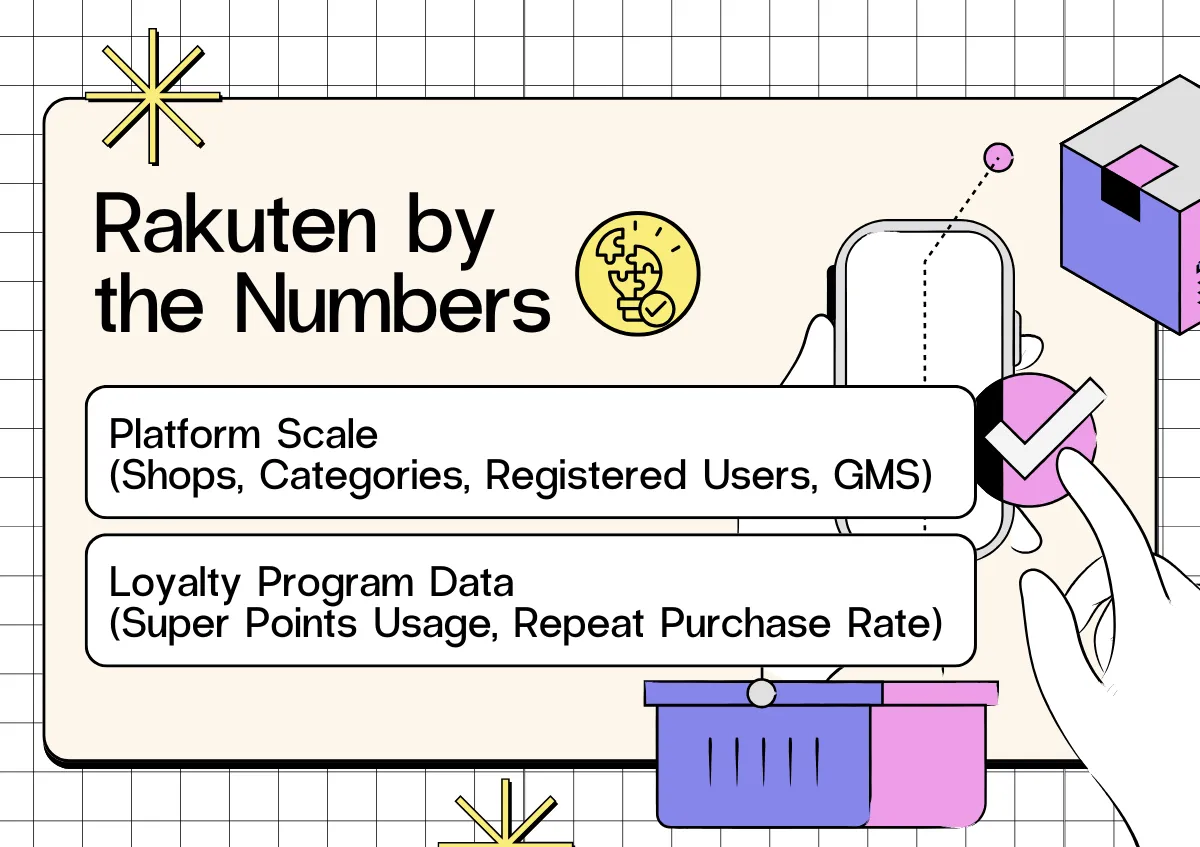
While Rakuten’s appeal is deeply tied to cultural factors and consumer habits, the complex data tells an equally compelling story. The platform’s scale, transaction volume, and loyalty metrics position it as one of Japan’s most powerful e-commerce ecosystems and a strategic entry point for global brands.
Rakuten’s core marketplace, Rakuten Ichiba, is one of the largest online retail platforms in Japan.
Significantly, Rakuten’s scale extends far beyond retail. The Rakuten Group ecosystem spans fintech (Rakuten Card, Rakuten Bank), travel (Rakuten Travel), digital content (Kobo eBooks), communications (Viber), and logistics, allowing sellers to reach consumers in multiple contexts. For international businesses, this interconnected structure means exposure doesn’t end at the product page; it’s reinforced across a network of touchpoints.
Rakuten’s Super Points program is at the heart of its customer retention engine. It functions as both a rewards system and an anchor that keeps shoppers within the Rakuten “economic zone.”
The psychological and practical impact of Super Points cannot be overstated. For many Japanese shoppers, points are a form of everyday currency, influencing purchase timing and brand choice. Bonus point multipliers during sales events (SPU – Super Point Up Program) and member-exclusive promotions create a sense of urgency and habit that competitors like Amazon Japan struggle to replicate.
For global brands entering Japan, aligning marketing campaigns with Rakuten’s point ecosystem can significantly boost visibility and conversion rates, while tapping into one of the most loyalty-driven customer bases in the market.
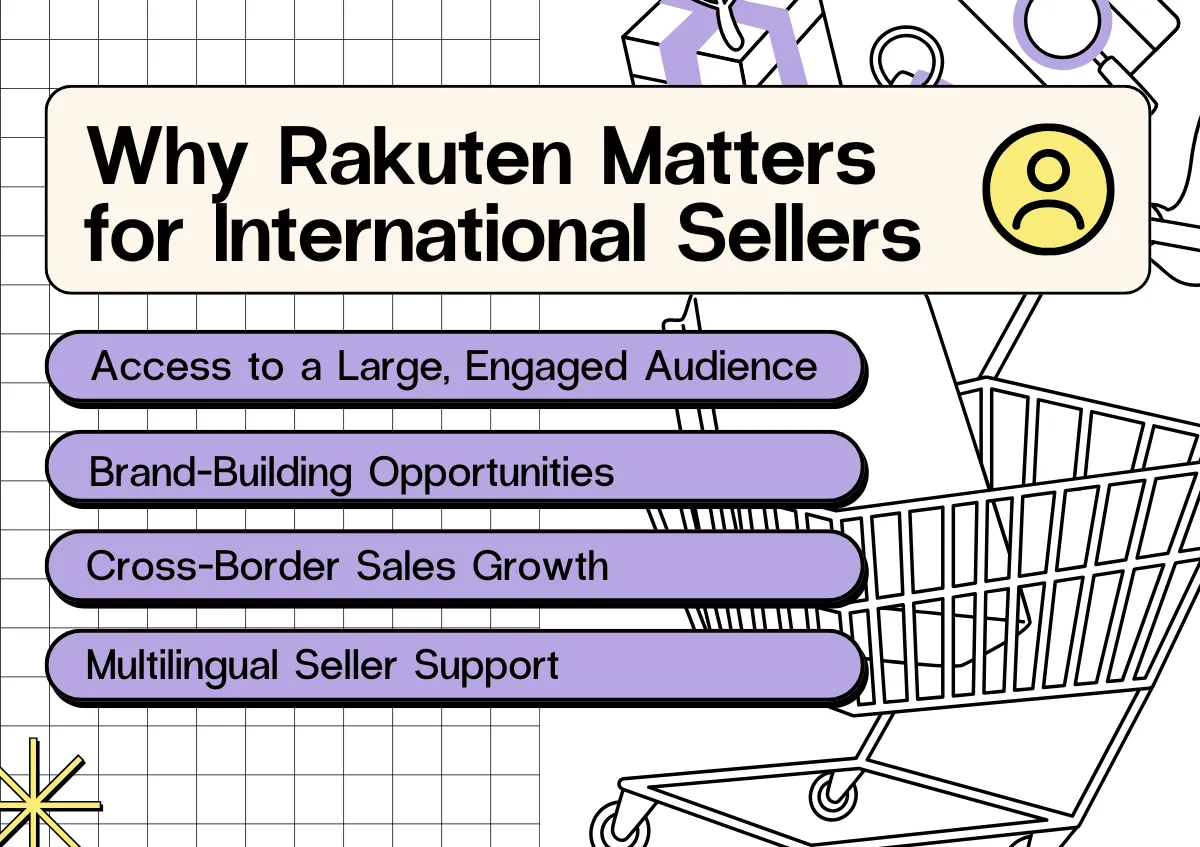
For international brands looking to enter Japan, Rakuten is more than just a sales channel, it’s a ready-made bridge into one of the most lucrative and brand-conscious e-commerce markets in the world. Its combination of scale, trust, merchant freedom, and cross-border infrastructure allows sellers to establish a Japanese presence without the usual barriers of local incorporation, distribution setup, or extensive cultural guesswork.
Japan is the world’s fourth-largest e-commerce market, with consumers who spend heavily online and value both quality and reliability. Rakuten Ichiba alone connects sellers to over 100 million registered members, many of whom shop on the platform multiple times a month. Because Rakuten covers a vast range of categories, from groceries to luxury goods, international sellers can tap into diverse buyer segments without having to build separate storefronts for each product line.
For global businesses, this isn’t just a numbers game; it’s access to a mature, highly engaged audience already conditioned to interact with brands through loyalty programs, seasonal sales, and personalized offers.
Unlike standardized platforms such as Amazon Japan, Rakuten operates a shop-centric model. Sellers have complete creative control over their storefront design, imagery, copywriting, and promotional strategies. This allows brands to maintain their authentic identity, rather than being reduced to a single product tile in a generic listing.
For international companies, this is especially valuable in Japan’s brand-conscious culture. By tailoring storefront visuals, messaging, and promotions to local preferences, sellers can create a differentiated presence that feels both authentic and locally relevant.

Rakuten has lowered many of the traditional barriers to selling in Japan.
For brands in categories like beauty, health supplements, specialty foods, and niche fashion, this cross-border capability means immediate market access without the long lead times of setting up local infrastructure.
Entering a culturally and linguistically different market can be daunting, but Rakuten reduces that friction by providing dedicated bilingual E-Commerce Consultants (ECCs). These consultants offer guidance on:
Support is available in English, Korean, Chinese, and Japanese, enabling international sellers to onboard efficiently and operate with confidence.
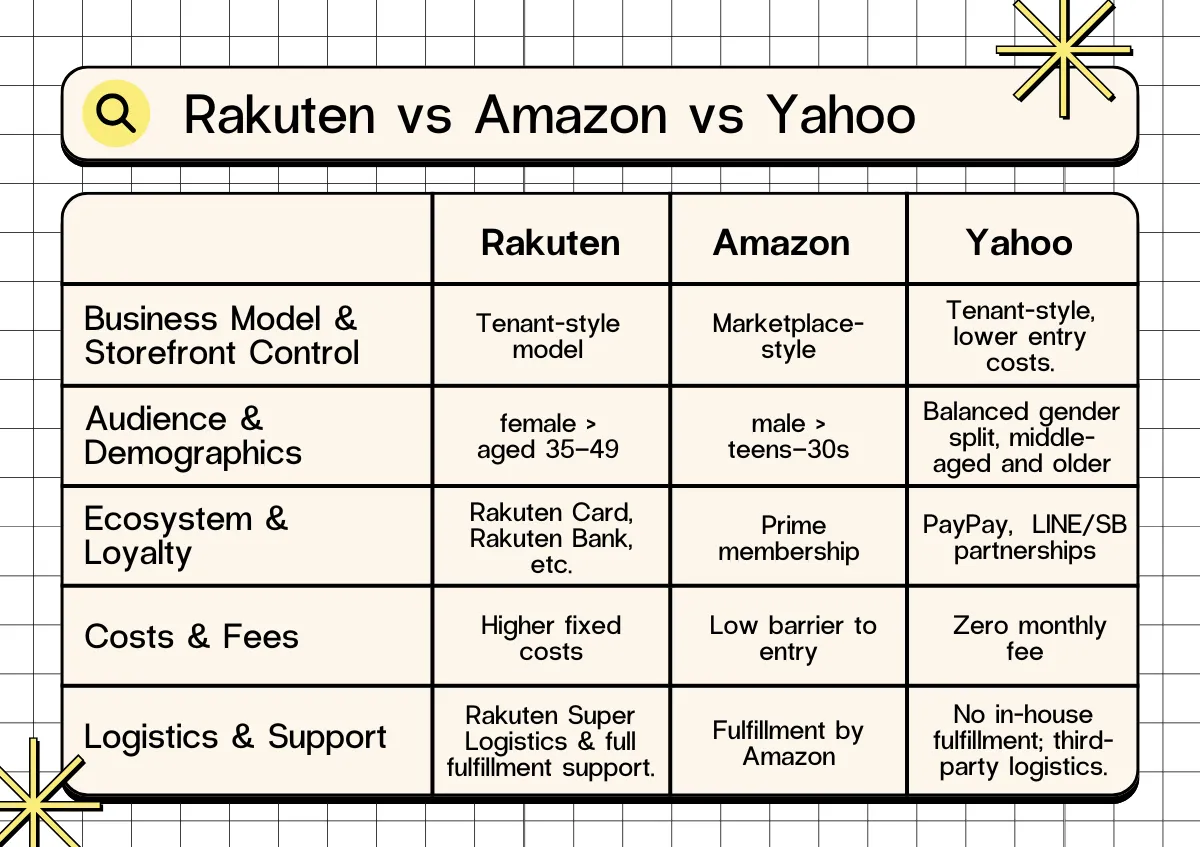
When entering Japan’s e-commerce market, the “Big Three” platforms: Rakuten, Amazon, and Yahoo! Shopping, dominate. Each has different strengths, business models, and target demographics. Below is a practical comparison so you can see where Rakuten excels and where it may not be the best fit.
If brand storytelling and differentiation are key, Rakuten gives you the most room to shine. Amazon wins for speed-to-market with minimal setup.
If your product targets browsing-based, value-conscious, loyalty-driven shoppers, Rakuten aligns well. Amazon is best for functional, needs-based purchases.
Rakuten’s ecosystem is unmatched in Japan for locking in repeat buyers through points and cross-service engagement.
If the budget is tight, Yahoo offers the cheapest entry; Amazon is middle-ground; Rakuten is an investment that requires a clear ROI strategy.
| Factor | Rakuten | Amazon | Yahoo! |
|---|---|---|---|
| Store Branding | ★★★★ | ★★ | ★★★ |
| Low Entry Cost | ★ | ★★★ | ★★★★ |
| Ecosystem Loyalty | ★★★★ | ★★ | ★★★ |
| Younger Audience | ★ | ★★★★ | ★★ |
| Older Audience | ★★★★ | ★★ | ★★★ |
| Logistics Power | ★★★ | ★★★★ | ★★ |
| Global Reach | ★ | ★★★★ | ★ |
Bottom line:
Choose Rakuten if you want brand control, loyalty program leverage, and a foothold with middle-aged and older consumers who enjoy browsing.
Choose Amazon if speed-to-market, young customer reach, and global shipping are your priorities.
Choose Yahoo! Shopping for the lowest entry cost and to tap into the PayPay/LINE ecosystems.

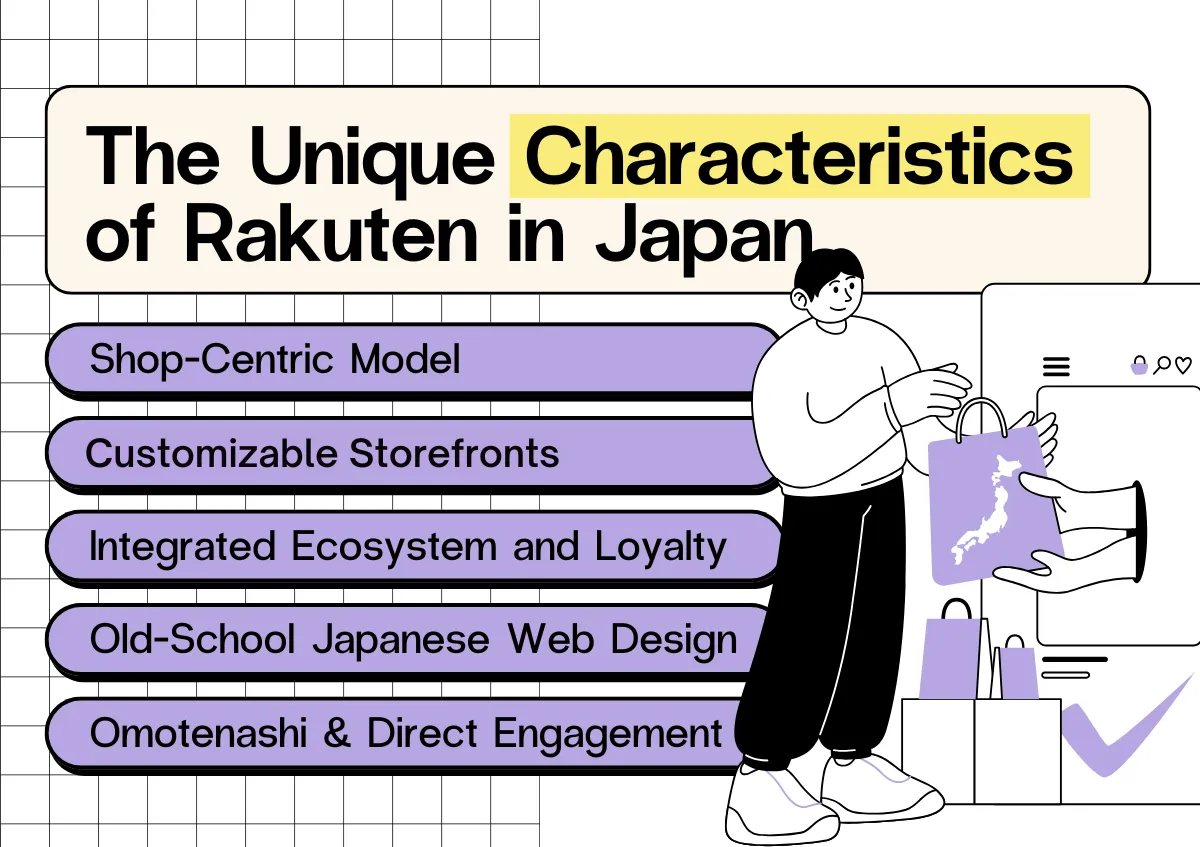
Rakuten’s position in Japanese e-commerce is not just about market share; it’s about its distinct structure, culture, and customer experience. International companies entering Japan must understand these nuances to succeed. Rakuten blends traditional Japanese retail values with a modern, data-driven ecosystem, creating a platform experience that is unlike Amazon, Yahoo! Shopping, or any Western equivalent.
Rakuten operates as a virtual shopping mall rather than a centralized warehouse-driven marketplace. Each merchant is a “tenant” with its own store, brand personality, and customer communication style. This encourages browsing and discovery, rather than purely search-and-click transactions. For sellers, it also means the ability to control product presentation, run shop-specific campaigns, and develop long-term relationships with customers; hallmarks of Japan’s retail tradition.
Unlike the uniform product listings of Amazon, Rakuten allows merchants to fully customize their storefronts down to banners, typography, layout, and promotional graphics. This flexibility enables sellers to localise their brand identity for the Japanese market, from seasonal color schemes to culturally resonant imagery. The best-performing Rakuten stores are often those that embrace this creative freedom, blending strong branding with Japanese consumer expectations for detailed, information-rich product pages.
Rakuten’s reach extends well beyond its marketplace. Its integrated ecosystem spans financial services, travel booking, mobile networks, eBooks, messaging apps, and more. All of these services are tied together by Rakuten Super Points, a loyalty program that rewards customers across the entire network. This creates high switching costs for shoppers, as points earned on groceries can be spent on travel or mobile bills. For international sellers, tapping into this ecosystem means benefiting from repeat purchases that are driven by loyalty, not just product necessity.
To newcomers, Rakuten’s interface can feel busy, with text-heavy layouts, colourful banners, and multiple calls-to-action all vying for attention. But in Japan, this “old-school” e-commerce design signals value, abundance, and transparency. Shoppers are accustomed to seeing dense product detail, clear promotional messaging, and a variety of buying incentives in one place. For overseas brands, resisting the urge to overly “declutter” their pages can be key to resonating with local shopping habits.

Rakuten’s culture encourages merchants to practice omotenashi, the Japanese concept of wholehearted hospitality. This goes beyond good customer service; it’s about anticipating needs, adding thoughtful touches, and building genuine rapport. On Rakuten, merchants can directly message customers, send personalized recommendations, and even include handwritten notes or small gifts in shipments. This personal touch not only strengthens brand loyalty but also sets the tone for long-term customer relationships, something highly valued in Japan’s consumer culture.
Strict regulations govern Japan's e-commerce market to ensure consumer protection, data privacy, and fair business practices. For international businesses, compliance isn’t just a legal requirement; it’s a crucial step in building trust with Japanese consumers.
Key Regulatory Bodies
1. Business Registration & Verification.
2. Product Listings & Marketing Compliance
3. Data Privacy & Consumer Protection
4. Import Regulations & Product Compliance
5. Customer Service & Return Policies
Thriving on Rakuten requires more than listing products; it demands an approach shaped by Japan’s distinct e-commerce culture. Success depends on aligning with local shopping habits, meeting high service expectations, and leveraging the tools Rakuten offers to foster trust and loyalty.
Two strategies are essential:
1. Optimize for a Mobile-First Market
Most Japanese consumers shop via smartphones, so Rakuten storefronts must be fast, easy to navigate, and fully mobile-friendly. Clear, information-rich product descriptions, high-quality images, and a frictionless checkout experience are non-negotiable.
2. Build Trust Through Service and Loyalty
Japanese shoppers place a premium on reliability, transparency, and exceptional customer care. Rakuten’s Super Points program is a powerful trust-building tool, rewarding purchases across its entire ecosystem and encouraging repeat buying. For international sellers, pairing excellent service with loyalty-driven promotions can turn first-time shoppers into long-term customers.
By focusing on mobile optimization and deepening customer trust, overseas brands can create a strong, credible presence on Rakuten, positioning themselves to win in one of the world’s most competitive e-commerce markets.
Selling on Rakuten is about more than understanding an e-commerce platform—it’s about embracing a cultural, technological, and consumer ecosystem that rewards quality, trust, and engagement. From its shop-centric model and integrated loyalty program to the power of personalized service, Rakuten offers global sellers an opportunity to stand out in one of the world’s most discerning markets. By aligning your approach with Japanese shopping behaviors, leveraging Rakuten’s built-in tools, and committing to high service standards, you can build lasting brand equity and drive sustainable growth in Japan.
Entering the Japanese e-commerce landscape requires a deep understanding of its unique digital ecosystem, and at its heart lies Rakuten. With an unparalleled scale of over 100 million registered members and a significant share of the country's Gross Merchandise Sales, Rakuten is more than just a marketplace; it's an integrated platform that international companies cannot afford to overlook. Below are some key points to keep in mind.
Rakuten is one of the most powerful gateways into Japan’s thriving e-commerce market, but success here demands more than just listing your products. It requires deep market insight, precise localization, and the right marketing strategies to stand out in a competitive, loyalty-driven landscape.
At IGNITE, we specialize in helping international brands break into Japan and thrive on platforms like Rakuten. Our multilingual team of Japanese and foreign marketing specialists will:
With IGNITE, you’re not outsourcing; you’re gaining a dedicated Japanese marketing partner committed to delivering measurable results.
Contact us and let’s ignite your Rakuten success and turn Japan into your next big growth story.
EN-JA bilingual project manager with experience leading Japanese translation and localization projects. Oversees SEO-focused content quality, production, and coordination.

Find the right service to grow your business in Japan.