What's Happening in Japan's Recruitment Industry? Hiring Trends and Growth Sectors Explained

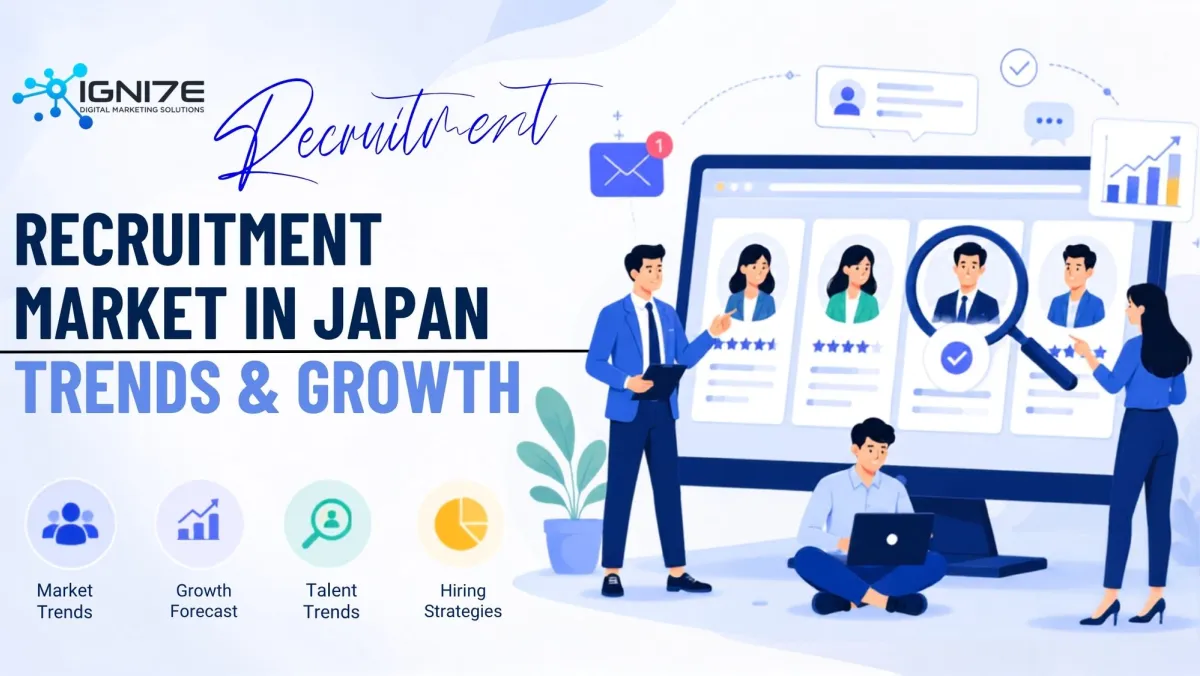
Japan's talent market is changing dramatically against a backdrop of a declining birthrate, an aging population, and the push for digital transformation (DX). Lifetime employment and mass hiring of new graduates used to be the norm. Yet today, an expanding career-change market and a shortage of specialized talent are reshaping the very idea of what recruitment means. On top of that, surging demand for IT talent, growing use of foreign workers, and the spread of HR tech are fueling the growth of entirely new talent-service markets.
In today's Japan, the talent market is no longer just about gathering people: the real question has become how to secure and develop people with the right skills. This article walks through the size of Japan's talent market, its major services, how the working environment is changing, and which sectors are set to grow next.
How Has Japan's Talent Market Expanded and Changed Over Time?
Japan's talent market has evolved alongside shifts in working styles and the broader economy. It used to be built around lifetime employment and mass new-graduate hiring; now, an expanding career-change market, the push for DX, and labor shortages are reshaping the recruitment landscape itself. A defining feature of recent years is the shift toward a market that values specialization, skills, and flexible ways of working.
The 1990s–2000s: An Era Built on Lifetime Employment
From the 1990s through the early 2000s, Japan's employment system revolved around lifetime employment and seniority-based promotion. Companies hired new graduates en masse and invested in developing them over the long haul. Changing jobs wasn't nearly as common as it is now—staying at one company for the long term was seen as the safest path to a stable career.
Back then, the talent market was dominated by staffing agencies and job ads; the kind of career-change agencies we see today barely existed. But as the economy struggled in the wake of the bubble's collapse, the employment landscape gradually began to shift—non-regular employment rose, merit-based pay started catching on, and the first cracks in the old system began to show.
The 2010s: The Career-Change Market Takes Off
By the 2010s, changing jobs had become a normal part of working life in Japan. As the declining birthrate and aging population squeezed the labor supply, companies leaned harder into mid-career hiring, and the market for recruitment and career transition platforms grew rapidly.
Job search engines like Indeed and recruiting via social media also opened up new ways for job seekers to find work. Meanwhile, the push for new ways of working sparked growing interest in side jobs and more flexible arrangements.
The defining shift of the 2010s could be said to be that people stopped molding their careers around the company and started shaping their careers around themselves.
The 2020s: Labor Shortages and DX Reshape the Market
In the 2020s, Japan's declining birthrate and aging population have created a serious labor crunch. Fields like IT, elder care, logistics, and construction are struggling to find people, and competition among employers has heated up considerably.
At the same time, the push for digital transformation has sent demand for IT engineers, AI specialists, and other advanced digital talent soaring. The "2025 Digital Cliff," a warning raised by Japan's Ministry of Economy, Trade and Industry (METI) in its DX Report, has only deepened companies' anxiety about the DX talent gap.
Work itself is changing too, with remote work spreading and restrictions on side jobs loosening. These days, it's not enough for companies to simply attract people—they also need the ability to develop their skills.
How Big Is Japan's Recruitment Market Today?
Japan's recruitment market is now one of the country's largest industries. According to Yano Research Institute's survey of the human resources business, the three major HR-related business sectors together grew 3.4% year-over-year in fiscal 2024, reaching 9.7962 trillion yen—continued growth fueled largely by the ongoing labor shortage.
Staffing still accounts for the biggest share of the market, but recruitment agencies, HR tech, and recruitment-DX services have all been growing fast as well. With hiring difficulties showing no signs of easing, companies are placing more weight on things like recruitment support, matching accuracy, and data-driven decision-making—not just posting job listings and hoping for the best.
High-value recruitment agency services are also expanding as the shortage of IT talent and demand for specialized hires grows. Between the labor shortage and the push toward digitalization, Japan's talent market is widely seen as a sector with plenty of room left to grow.
Five Key Services Shaping Japan's Recruitment Market
As companies grapple with hiring challenges and workers embrace more varied ways of working, a wide range of talent services has sprung up across Japan. Beyond the traditional staples of staffing and job ads, newer approaches—career-change agencies, direct recruiting, HR tech—are all expanding fast.
1. Recruitment Agencies: A Fast-Growing Corner of the Market
Recruitment agency services are one of the fastest-growing parts of Japan's talent market. Agents introduce candidates to companies looking to hire, typically working on a success-fee basis—they get paid once the hire is made.
As demand grows for immediately productive hires and for specialists in general, the high-end career-change market has expanded right along with it. High-value roles for IT engineers, consultants, and managers are becoming more common, adding energy to the career-change market as a whole.
Because many Japanese job seekers feel anxious about the process, there's also strong demand for agencies that go beyond simple introductions and offer career counseling and interview coaching too.
2. Staffing Services: The Backbone of Flexible Hiring
Staffing remains one of the largest parts of Japan's talent market. Since it lets companies bring on workers only for as long as they're needed, it's widely used across clerical work, manufacturing, logistics, IT, and more.
As labor shortages tied to the declining birthrate and aging population deepen, companies increasingly need to secure the right people exactly when they need them—making staffing agencies a key part of how Japanese businesses keep their workforce flexible.
Demand is also growing for staffing workers with specialized skills, and the market is expanding into higher-value niches like IT engineer staffing and placements for highly specialized professionals.
3. Job Ads and Job Search: Going Fully Digital
Job advertising and job search have gone thoroughly digital in recent years. Print listings and traditional job boards have given way to search engines like Indeed.
Companies, too, have moved beyond simply posting openings—they're now using SEO and social media to reach candidates directly. Recruiting through Instagram and YouTube, in particular, has taken off among younger job seekers.
Add in pay-per-click ads and data-driven recruiting, and hiring today looks a lot more like marketing than it used to. In Japan's current talent market, how well a company uses digital tools can make or break its hiring results.
4. Direct Recruiting: A Rapidly Expanding Approach
Direct recruiting—where companies reach out to candidates themselves rather than waiting for applications—is also growing fast in Japan. Platforms like BizReach and LinkedIn are leading examples.
What sets the direct recruiting approach apart is that companies take the initiative instead of just waiting for people to apply. That's become especially important in competitive fields like IT and high-end professional hiring.
It also lets companies reach people who aren't actively job hunting but might be open to the right opportunity. In a market where simply posting a job is not always enough to attract candidates, direct recruiting, as a more proactive approach, is drawing increasing attention.
5. HR Tech and Recruitment DX: The Fastest-Growing Segment
HR tech—the use of IT and AI in human resources and recruitment—is the fastest-growing segment of Japan's talent market.
HR tech includes tools like applicant tracking systems (ATS), AI-powered matching, online interview platforms, and talent management systems, all of which help companies streamline hiring and make better use of data.
Many Japanese companies had been slow to digitize their HR functions, but it is changing. With labor in short supply, being able to recruit efficiently with a smaller team has become essential, and the HR tech market is expected to keep growing as a result.
How Is the Working Environment Changing?
Driven by the declining birthrate, an aging population, and the push for DX, the working environment in Japan is undergoing a real transformation. Companies are now thinking about what kind of talent they need exactly and how best to secure it. Demand for IT talent and specialists keeps climbing, and new hiring trends, from tapping foreign talent to high-end recruitment, are taking hold.
Labor Shortages Are Fueling Market Growth
Japan's shrinking, aging population has become a serious social challenge. In rural areas and among small and mid-sized businesses, hiring has become so difficult that being unable to find people has become a real business problem.
As a result, competition among employers has intensified. Companies that once relied mainly on new-graduate hiring are shifting toward mid-career and year-round recruitment, which is helping the career-change market grow even further.
Hiring costs are climbing too, especially in industries hit hardest by labor shortages—elder care, construction, logistics, and food service among them. In a real sense, the labor shortage itself has become one of the forces driving growth in Japan's talent market.
The Push for DX Is Deepening the IT Talent Shortage
As Japanese companies push forward with AI, cloud computing, and data-driven business reforms, they're running into the same wall again and again: not enough people to do the work.
Demand for IT engineers, data scientists, and security specialists has surged, intensifying competition among employers. Since METI first raised the alarm about the "2025 Digital Cliff," companies have grown increasingly worried about the DX talent gap.
It affects both large corporations and small-to-mid-sized enterprises. Throughout Japan, it has become increasingly common for companies to want to digitalize their services yet lack the talent needed to do so.
Specialist and High-End Recruitment Are on the Rise
Demand for specialists and high-end talent is growing across fields like IT, consulting, finance, and manufacturing, where competition to land people with deep expertise and management experience has intensified.
Japan used to favor "potential-based" hiring—betting on someone's future promise. Now, the emphasis has shifted toward hiring people who can deliver results right away. That shift has fueled growth in the high-end job market, where annual salaries of 10 million yen or more are increasingly common.
Companies, too, have moved past simply filling seats, focusing on hiring people who can directly drive company growth. Skills and specialization have become the defining factors in today's hiring decisions.
Demand for Global Talent Is Climbing
As Japanese companies expand overseas and ramp up efforts to serve international visitors, they're placing greater value on people who can operate across borders: multilingual talent and those with international business experience are in particularly high demand.
Industries like IT, manufacturing, and tourism are increasingly hiring globally, including foreign nationals. Closer ties with overseas offices and the growth of cross-border e-commerce are also driving demand for people who combine language skills with specialized expertise.
For Japan's talent market, the goal has expanded well beyond domestic hiring—it's now also about building the workforce needed to compete on the global stage.
Five Measures Japan's Recruitment Market Is Taking to Address Labor Shortages
Japan's working-age population keeps shrinking as the birthrate falls and the population ages, leaving many companies facing a serious labor crunch. As a result, today's Japanese talent market is moving well beyond simply ramping up recruitment: it is embracing more diverse ways of using talent and leaning on DX-driven solutions. Making better use of foreign workers and senior employees, and investing in reskilling, have all become central to a bigger question: how do you make the most of the people you already have?
1. Hiring More Foreign Workers
To help address the severe talent shortage, Japan is expanding its hiring of foreign workers, especially in fields like elder care, hospitality, food service, and manufacturing, where it's become genuinely difficult to fill roles with Japanese workers alone, pushing companies to rely more heavily on foreign labor.
In recent years, the introduction of the Specified Skilled Worker system has opened the door for foreign talent to work in a much broader range of fields. Japan is also reworking its Technical Intern Training Program, building toward a system designed around employing foreign workers for the medium to long term rather than treating them as temporary help.
In today's talent market, hiring foreign workers has become viewed as a core strategy for tackling the labor shortage head-on.
2. Bringing Senior Workers Back Into the Workforce
As Japan's population ages, re-employing senior talent has become another key piece of the puzzle. It used to be standard for people to leave the workforce once they hit retirement age, but now more and more companies offer re-employment programs or have pushed back their retirement age altogether.
In industries hit hardest by the labor shortage, experienced older workers have become genuinely important to keeping operations running. For instance, in manufacturing, logistics, and services, their hands-on experience and ability to pass down technical know-how make them valuable.
People are also living healthier for longer, and many simply want to keep working. So instead of drawing a hard line at a certain age, Japan's talent market is increasingly focused on getting value out of workers across every generation.
3. Helping Dormant Talent Return to Work
Another piece of the puzzle is helping "dormant talent"—people with qualifications and experience who simply aren't working right now—get back into the workforce. In fields like nursing, childcare, and elder care, there is a push to help qualified people who have been away for a while return to their profession.
More companies are also rolling out shortened hours and remote work for people who left their jobs to raise kids or care for family members. By making work more flexible, these companies are lowering the barrier for people to come back. In short, Japan's talent market isn't just about finding new people anymore, but also about making better use of the talent already out there.
4. Investing in Reskilling and Continued Learning
Reskilling and continued learning have become a bigger part of the conversation in Japan lately. Reskilling means workers picking up new knowledge and skills so they can move into new roles or responsibilities—and with DX advancing fast, demand for people with IT and digital skills has increased, pushing many companies to invest more heavily in training.
The government is treating reskilling as a policy priority too, rolling out subsidies and building up vocational training programs. Companies, for their part, are increasingly offering online training and helping employees earn certifications.
5. Pushing Forward with DX and Automation
DX and automation are also moving fast as a way to cope with the labor shortage. DX and automation matter especially in retail, logistics, and manufacturing, where companies can no longer afford to rely on the workforce alone. More businesses are turning to AI, RPA, robotics, and automated systems to streamline their operations, such as unmanned checkout counters, automated warehouses, and AI-powered chat support.
Recruitment itself is getting the same treatment, with AI matching tools and applicant tracking systems becoming more common. The question companies are asking has shifted from "how do we hire more people" to "how do we build an organization that runs well with fewer of them."
Where Is Japan's Recruitment Market Headed From Here?
As the birthrate keeps falling, the population keeps aging, and DX keeps advancing, Japan's talent market is set for even bigger changes ahead. The hiring struggles caused by a shrinking workforce show no signs of easing, meaning companies will need to be more flexible in their recruitment than ever before. And as AI and digital technology continue to spread, the market is shifting to value skills over sheer headcount.
A Prolonged Labor Shortage Means Even Fiercer Competition Ahead
Japan's birthrate isn't expected to bounce back anytime soon, so the labor shortage looks set to be a long-term reality. Fields like IT, elder care, logistics, and construction are already struggling to hire, and the talent competition is only going to get more intense.
That means companies can't just compete on pay and benefits anymore—they'll need to offer flexible work arrangements and real career support too. And it's not just about hiring people; keeping them has become just as important.
On top of that, the hiring gap between rural or small businesses and their big-city counterparts keeps widening. Going forward, the real question for Japan's talent market won't just be how to hire people—it'll be how to keep them around for the long haul.
The AI Era Is Pushing Japan Toward Job-Based, Skills-Focused Hiring
As AI and DX keep advancing, Japan's talent market looks set to move further toward a job-based, skills-focused model. Traditionally, Japanese companies have run on membership-based employment, where age and years of service matter most. Lately, however, there is growing interest in job-based employment, where roles and areas of expertise are clearly defined from the start.
In fields like IT, AI, and data analysis, demand for people with serious technical expertise is exploding. As a result, companies care less about how long someone has been at a company and more about what they can actually do.
Bit by bit, Japan is moving away from HR systems built around lifetime employment and toward ones that reward expertise and results.
Is There an Opportunity for Foreign Companies?
Between the labor shortage and the push for DX, demand for new kinds of talent services keeps growing in Japan, opening doors for foreign companies. Rising demand for IT talent and foreign worker recruitment support both point to genuine opportunities. That said, Japan has its own distinct hiring culture and business norms, so it's important to keep localization in mind.
Growing Demand for Recruitment DX Is a Major Opening for HR Tech Companies
Driven by the labor shortage, Japanese companies are digitizing their recruitment processes faster than ever. With fewer people to do the work, demand for HR tech and recruitment DX tools is climbing quickly.
Key growth areas include applicant tracking systems, AI-based matching, online interviews, and talent management software. It isn’t simply large corporations driving the trend, as small and mid-sized companies are just as eager to streamline their hiring.
Many Japanese companies have historically lagged behind their overseas peers when it comes to digitizing HR, which means there's still plenty of room to grow. For HR tech and recruitment SaaS companies, Japan's talent market looks like an opportunity for foreign companies.
The Foreign Worker Market Is a Tailwind for International Talent Service Companies
Japan's severe labor shortage has fueled rapid growth in the market for recruiting foreign workers. In elder care, hospitality, food service, and manufacturing, foreign workers have become genuinely essential to keeping things running.
As a result, there is renewed demand for overseas recruitment agencies, Japanese language schools, and visa and residency support services. The Specified Skilled Worker system has also made it easier in recent years to bring in foreign talent across a wider range of industries.
Japanese companies are also paying more attention to multilingual support and cross-cultural management. Supporting foreign worker recruitment has, in its own right, turned into a significant growth market.
Success for Foreign Companies Hinges on Understanding Japan's Hiring Culture
At the same time, Japan's hiring culture is unique. Mass hiring straight out of college and an expectation of long-term employment are still deeply embedded, and plenty of companies still care a lot about retention and whether someone is a good cultural fit.
The hiring process in Japan also tends to be lengthy, often involving several rounds of interviews and a lot of internal back-and-forth. As a result, foreign companies cannot just copy-paste their playbook from home and expect it to work in Japan.
Getting the localization right and genuinely understanding how business gets done in Japan is often what separates success from failure.
Japanese Labor Law Basics Foreign Employers Should Know
One of the biggest surprises for foreign employers is that Japan doesn't recognize at-will employment. Unlike in the U.S., you generally cannot dismiss an employee simply because the fit isn't working out. Under Article 16 of Japan's Labor Contract Act, a dismissal is only valid if it's backed by "objectively reasonable grounds" and considered appropriate by general societal standards—a legal bar that courts interpret strictly.
In practice, it means employers typically need to document performance issues, offer a genuine chance to improve, and explore alternatives like reassignment before termination is even on the table. As a result, negotiated resignations and severance packages are far more common than outright dismissals. There's also no legal requirement for severance pay, but many companies offer it anyway to make voluntary resignation more appealing.
Beyond dismissal, employers need to be aware of the "36 Agreements"—a mandatory labor-management agreement required before employees can work any overtime at all, with statutory premium rates for overtime, late-night, and holiday work. Given how employee-protective this legal framework is, most foreign companies entering Japan work with local legal counsel or an Employer of Record to avoid costly missteps.
What Benefits and Work-Life Balance Do Employees in Japan Expect?
By law, workers get 10 paid vacation days after six months on the job, which can rise to 20 days after several years working for the company. Employers are legally required to ensure that employees take at least 5 of their entitled paid leave days annually—a rule that exists precisely because cultural factors such as loyalty to the company or fear of burdening coworkers often lead to underutilization of annual leave. Japan also has 16 national holidays that are generally treated as paid holidays.
Work-life balance expectations are shifting fast, especially among younger workers. Expectations for work-life balance and flexible work arrangements continue to rise, with work that allows for a good work-life balance increasingly valued as an ideal job trait. Remote and hybrid arrangements, once rare, are now common enough that job platforms list them as a standard filter, and several major employers and local governments—including Tokyo—have begun piloting four-day workweeks.
Parental leave is also expanding: expecting mothers get six weeks of paid maternity leave before the expected birth date and eight weeks after giving birth, while fathers can take up to four weeks of paid leave within eight weeks of a child's birth, though usage among men remains low. Both parents are also eligible for a follow-on childcare leave, available until the child turns one. Employers should note that Japan has no statutory sick leave, so many companies voluntarily build in 5–10 paid sick days to stay competitive for talent.
Conclusion: Labor Shortages and DX Are Reshaping Japan's Recruitment Industry
Driven by a shrinking population and the labor shortage that comes with it, Japan's talent market shows no signs of slowing down its transformation. Rising demand for IT talent, greater use of foreign workers, and reskilling support will all only become more important from here. Recruitment itself keeps getting more digital too, with HR tech and recruitment DX expected to keep growing.
At the same time, Japan's hiring culture and its attachment to long-term employment won't change overnight, so foreign companies entering the market will need to localize carefully. Despite the labor shortage, Japan's talent market is worth watching precisely because it keeps generating new services and new ways of working.
For any foreign company thinking about entering or expanding in Japan, understanding exactly where talent demand is rising and which hiring challenges are getting worse will be crucial to building the right strategy.
Frequently Asked Questions

Japan's talent market ranks among the country's largest industries. According to Yano Research Institute, the three major HR-related business sectors were worth roughly 9.8 trillion yen in fiscal 2024. Staffing accounts for the largest share, but recruitment agencies, HR tech, and recruitment DX have also been growing. With the labor shortage showing no signs of easing, steady growth looks likely to continue.
The core issue is simple: Japan's workforce is shrinking as the birthrate falls and the population ages. Fewer young people means a smaller talent pool, while an aging population is driving up demand for care and healthcare workers. IT and DX fields are dealing with their own serious talent gap on top of that. Hiring has gotten especially tough in rural areas and at small and mid-sized companies, where it's becoming common for job postings to go unfilled. At this point, the labor shortage has become one of the biggest factors limiting company growth in Japan.
IT and DX are the standout growth areas right now. Demand is surging in AI, cloud computing, and data analysis, making competition for IT engineers especially fierce. Recruitment agencies, HR tech, and recruitment DX are all expanding as well. Meanwhile, industries facing acute labor shortages—elder care, logistics, hospitality—are seeing more demand for hiring support too. Overall, the market is clearly shifting toward valuing specialization and skills more than ever.
Lifetime employment used to be the default in Japan, but the career-change market has grown substantially since then. Part of it comes down to companies leaning harder into mid-career hiring to cope with labor shortages. People's attitudes have shifted too, as more workers now prioritize finding a job that actually fits them over sticking with one company for decades. And with demand for IT talent and specialists on the rise, switching jobs has become a genuinely effective way to boost your salary or move up the career ladder.
Companies are tackling the labor shortage from a few different angles: hiring more foreign workers, bringing back retired employees, helping dormant talent return to work, and investing in reskilling. Many are also turning to AI and RPA to automate tasks and get more done with fewer people. The mindset has shifted from simply hiring people to building a team that can run efficiently with fewer people. The rise of HR tech is transforming recruitment itself.
The biggest hurdle is adapting to Japan's distinct hiring culture. Mass hiring of new graduates and long-term employment expectations are still deeply rooted, and many companies strongly value retention and cultural fit. The hiring process also tends to be slow, and Japanese-language capability is often a must. That said, the DX talent gap and rising demand for foreign worker recruitment mean there are opportunities: companies just need a localization strategy built specifically for the Japanese market.
EN-JA bilingual project manager with experience leading Japanese translation and localization projects. Oversees SEO-focused content quality, production, and coordination.