Japan’s Transportation AI Market: 2026 Trends, Applications, and Future Outlook

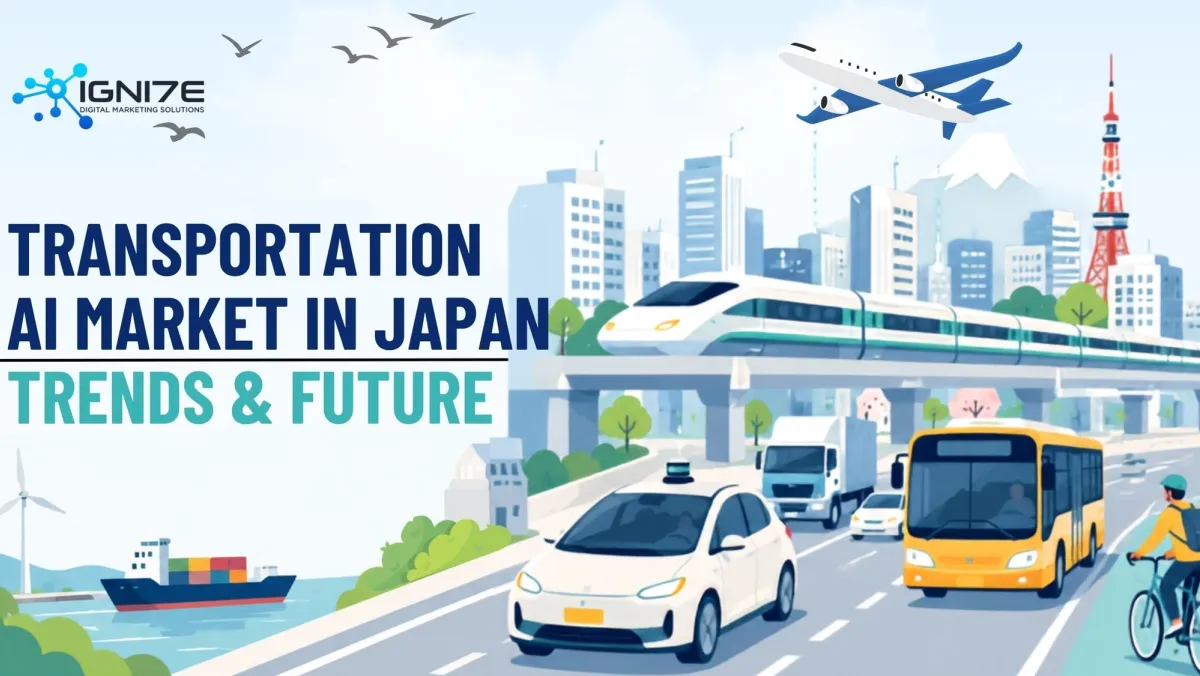
Advancements in AI technology are transforming Japan’s transportation industry. Traditionally, transportation operators relied on manual processes to manage operations and ensure safety. In recent years, however, AI has been increasingly adopted to improve demand forecasting, optimize operations, and advance autonomous driving technologies.
In Japan, industry-specific challenges—including labor shortages driven by an aging population and declining birthrate, the need to maintain regional public transportation, and growing inbound tourism demand—have heightened expectations for AI adoption. This article provides an overview of AI applications in Japan’s transportation sector, examines the latest market trends, and highlights real-world implementation examples.
Japan’s Transportation AI Market: Understanding the Basics
To understand the overall role of AI in transportation, it is important to examine where it is being applied and why it has attracted so much attention. The section below outlines the current state of AI adoption in Japan’s transportation market and reviews the market size.
The Current State of AI Adoption in Transportation
Japan’s transportation market is steadily transitioning from AI pilot projects to full-scale implementation. While AI has long been associated primarily with autonomous driving, it is now being adopted across a much broader range of applications. Transportation operators generate and accumulate vast amounts of operational and passenger data every day, making the industry particularly well-suited for AI.
Recent advances in generative AI and AI agents have also expanded AI applications into new areas, including automated customer support and operational assistance. Although Japan has traditionally taken a cautious approach to AI adoption due to its strong emphasis on safety and operational reliability, demand for AI solutions continues to rise.
Transportation AI vs. Smart Mobility
The term smart mobility is often used alongside transportation AI, but the two concepts are not interchangeable. Transportation AI refers to the use of AI to improve the efficiency and safety of transportation systems through applications such as demand forecasting, anomaly detection, operational optimization, and autonomous driving support. Smart mobility, by contrast, is a broader concept. It combines AI with technologies such as IoT, big data, and communications technology to make transportation more convenient and efficient. Mobility as a Service (MaaS), on-demand transportation, and autonomous mobility services are all part of the smart mobility ecosystem.
Key Technologies Powering Transportation AI
Several core technologies work together to enable modern transportation AI. Machine learning (ML) forms the foundation by analyzing large volumes of historical and real-time data to improve demand forecasting, route optimization, predictive maintenance, and traffic management. Computer vision complements ML by processing images and video from cameras and sensors, allowing vehicles and infrastructure to detect pedestrians, recognize traffic signs, monitor passenger flows, and identify safety hazards.
Recent advances in generative AI and AI agents are expanding AI’s role beyond prediction and automation. Generative AI enables more natural customer interactions through chatbots and virtual assistants. At the same time, AI agents can autonomously support operational tasks such as schedule adjustments, fleet coordination, and maintenance planning by analyzing data and recommending actions in real time.
Transportation AI also relies on a connected digital infrastructure. IoT sensors continuously collect data from vehicles, stations, roads, and traffic signals. At the same time, edge AI processes the information close to where it is generated, reducing latency and enabling real-time decision-making for safety-critical applications such as autonomous driving and traffic control. Meanwhile, digital twins—virtual replicas of transportation assets or networks—allow operators to simulate traffic conditions, test operational scenarios, and optimize infrastructure before implementing changes in the real world. Together, these technologies are making transportation systems safer, more efficient, and increasingly autonomous.
Why Japan’s Transportation AI Market Is Gaining Attention
Japan’s transportation industry faces chronic labor shortages among bus drivers, taxi drivers, railway personnel, and other transportation workers, driving strong demand for labor-saving technologies and greater operational efficiency.
At the same time, maintaining public transportation in regional areas has become an urgent challenge as Japan’s population continues to age. While passenger numbers continue to decline, transportation infrastructure must still be maintained, increasing expectations for AI-powered operational efficiency and on-demand transportation services.
The recovery of inbound tourism is another key driver. As the number of international visitors to Japan grows, demand for multilingual support and seamless travel experiences has increased, fueling the adoption of AI chatbots and related technologies. In addition, the Japanese government’s efforts to promote digital transformation (DX) in transportation and smart city initiatives are supporting market growth and creating a stronger foundation for AI adoption.
Current Market Size and Future Outlook
The transportation AI market is one of the fastest-growing sectors worldwide. Since it encompasses a broad range of applications—including autonomous driving, operational optimization, and AI-powered logistics—market size estimates vary depending on the definition used. Even so, the Japanese market is expected to continue growing steadily.
According to market research, Japan’s AI market in the transportation sector was valued at approximately USD 123.55 million in 2024. It is projected to reach approximately USD 372.09 million by 2035, representing a compound annual growth rate (CAGR) of approximately 10.5%. Looking ahead to the 2030s, broader adoption of autonomous driving, increased automation of operations management through AI agents, and greater integration of transportation infrastructure data are all expected to drive further growth. The combination of Japan’s highly developed public transportation network and cutting-edge AI technologies is expected to create significant market opportunities in the years ahead.
Five Key Applications Driving AI Adoption in Transportation
AI adoption in transportation extends far beyond autonomous driving. It is being implemented across a wide range of applications, from improving passenger convenience and operational efficiency to enhancing safety.
1. Demand Forecasting and Congestion Prediction
One of the most common applications of AI in transportation is demand forecasting and congestion prediction. AI analyzes historical ridership data along with factors such as the day of the week, time of day, weather conditions, and event schedules to predict future passenger volumes and demand fluctuations. In the railway sector, these forecasts are used to anticipate peak commuting periods and event-related congestion, helping operators manage passenger flow and determine when additional train services are needed. By identifying high-demand locations and time periods in advance, operators can allocate vehicles more efficiently.
2. Operational Optimization and Schedule Management
AI is also being used to improve the efficiency of transportation operations. While demand forecasting supports planning, operational optimization helps operators make decisions during day-to-day operations. Transportation providers regularly face unpredictable situations such as accidents, traffic congestion, and sudden increases in passenger demand. AI’s ability to analyze real-time data and recommend appropriate responses is one of its greatest strengths.
For railways, AI can assist with timetable adjustments during service disruptions and assess the impact on passenger transfers. For bus operators, it can recommend route changes based on current traffic conditions. By making better use of limited vehicles and personnel, AI contributes to both lower operating costs and improved service quality.
3. Enhanced Safety Monitoring and Maintenance
Safety is the highest priority for transportation operators. AI is increasingly being introduced to detect anomalies that may be difficult for humans to identify and to improve the efficiency of infrastructure maintenance.
Another notable trend is the shift from traditional scheduled maintenance to AI-powered predictive maintenance. Rather than responding after equipment failures occur, AI detects early warning signs and enables preventive action, improving safety while reducing maintenance costs. As labor shortages become more severe, AI is becoming an essential tool for maintaining safety standards while improving operational efficiency.
4. Customer Service and Automated Inquiry Handling
AI is also being adopted to improve the efficiency of customer service. Railway stations and call centers receive large volumes of inquiries regarding service updates, delays, and transfer information. Automating these responses with AI helps reduce the workload on staff.
For example, AI chatbots can provide 24/7 support through websites and mobile apps, making it easier for passengers to access information whenever they need it. Recent advances in generative AI have also enabled more natural conversations and more flexible responses. In addition, demand for multilingual AI guidance systems continues to grow as the number of international visitors to Japan increases.
5. Autonomous Driving and Self-Driving Technology
Among transportation AI applications, autonomous driving and self-driving technology continue to attract the greatest attention. These technologies use AI to recognize surrounding conditions and make driving decisions, enabling safer transportation while reducing reliance on human operators. In the automotive industry, autonomous driving systems have become increasingly sophisticated, and limited self-driving capabilities have already entered practical use. Although deployment in Japan remains cautious due to safety standards and regulatory requirements, these technologies are expected to play an increasingly important role in addressing driver shortages and the challenges of an aging population.
The Evolution of AI in Japan’s Transportation Industry
Japan’s transportation AI market has evolved alongside the digitalization of transportation infrastructure and the growing use of data. The following timeline outlines how AI adoption has progressed in Japan’s transportation sector.
2010s: Building the Foundation for Digitalization and Automation
The 2010s marked a period of foundational digitalization and automation in Japan’s transportation market. Key developments included the accumulation of passenger data through IC cards, improvements in transportation surveillance systems, and the visualization of vehicle locations using GPS. During the 2010s, railway, bus, and taxi operators also established systems for collecting and managing operational and passenger data.
2018–2021: Expansion of AI Pilot Projects
Beginning around 2018, AI pilot projects became increasingly common across the transportation sector. Advances in AI technology made practical applications such as demand forecasting, image analysis, and operational optimization increasingly viable.
Railway operators introduced AI-powered congestion forecasting for stations and image analysis for infrastructure inspections. In the bus industry, pilot programs for on-demand transportation using AI-based demand forecasting expanded significantly. AI-powered taxi dispatch systems also attracted considerable attention. Overall, the period from 2018 to 2021 was characterized by experimentation to explore the practical capabilities of AI.
2022–2024: Transition to Full-Scale Deployment
Against the backdrop of worsening labor shortages and the acceleration of digital transformation (DX) in transportation, AI began moving from pilot programs into day-to-day operations. Railway operators increasingly integrated AI into infrastructure maintenance and anomaly detection. In contrast, bus operators and regional transportation providers expanded the practical use of on-demand services and AI-driven demand forecasting in regular operations.
Current Transportation AI Market Trends (2025–2026)
Japan’s transportation AI market has entered the stage of full-scale implementation. In recent years, AI has evolved from being viewed as a future technology to becoming a practical solution for addressing real-world operational challenges.
AI Adoption Accelerates Amid Labor Shortages
The most significant factor driving AI adoption in today’s transportation industry is the growing labor shortage. The number of bus drivers, taxi drivers, railway maintenance personnel, and other transportation workers continues to decline each year. As Japan’s aging population and declining birthrate make it increasingly difficult to recruit new workers, traditional labor-intensive operating models are no longer sufficient to sustain transportation services.
As a result, AI is no longer regarded simply as a tool for improving efficiency, but as a critical technology for maintaining transportation infrastructure. The need for such technology is especially urgent for public and regional transportation systems, where workforce shortages are particularly severe, and the importance of AI adoption is expected to continue growing.
Advancing Real-Time Operational Optimization
The growing use of real-time data to improve transportation operations has also emerged as a major trend. Transportation operators must respond quickly and flexibly to constantly changing conditions. AI can now analyze vast amounts of data in real time, enabling faster and more accurate decision-making across transportation operations.
Japan’s transportation market is also distinguished by exceptionally high expectations for safety and punctuality. As a result, demand continues to grow for technologies capable of responding to changing conditions in real time. Going forward, AI is expected to become a core technology that supports not only transportation back-office functions but also the operation of transportation services themselves.
AI Applications in Japan’s Transportation Industry
AI is already being adopted across a wide range of transportation sectors in Japan, including automobiles, buses, and taxis. Below are some of the leading examples.
Automobiles: Autonomous Driving and Driver Assistance AI
The automotive industry is one of the most technologically advanced segments of Japan’s transportation AI market. While AI is attracting attention as a core technology for achieving fully autonomous driving, it has already been put into practical use in driver assistance and vehicle safety systems. As a result, the automobile sector stands out as one where both technological innovation and practical implementation are advancing rapidly.
One of the most prominent applications is AI-powered driver assistance. Using onboard cameras and sensors, AI monitors the surrounding environment in real time to detect pedestrians and obstacles, while also warning drivers about lane departures. AI is also increasingly used to monitor driver behavior and detect drowsiness or distracted driving. These technologies play an important role in preventing accidents involving elderly drivers and reducing human error. By supporting human drivers, AI not only enhances road safety but also reduces the physical and mental burden of driving.
Railways: AI for Predictive Maintenance and Safety Management
Japan's railway industry is increasingly adopting AI to improve maintenance, operational efficiency, and safety. One of the most important applications is predictive maintenance, where AI analyzes data collected from onboard sensors, inspection equipment, and infrastructure monitoring systems to identify signs of wear before failures occur. Predictive maintenance enables railway operators to shift from scheduled maintenance to condition-based maintenance, reducing service disruptions, lowering maintenance costs, and improving network reliability.
AI is also being deployed to enhance railway safety. In 2026, Japanese railway operators began introducing AI-powered monitoring systems at railroad crossings to help detect people or objects trapped on the tracks. By analyzing camera footage in real time, these systems can alert operators more quickly and support faster responses, helping reduce the risk of accidents at crossings. The initiative reflects a broader trend toward using computer vision and AI-powered image analysis to strengthen railway safety.
Beyond maintenance and safety, Japanese railway companies are integrating AI with IoT sensors, computer vision, and data analytics to support smarter railway operations. AI is also being used to analyze ridership and operational data, helping operators improve demand forecasting, optimize train schedules, and manage congestion more effectively. Together, these technologies are enhancing safety, operational efficiency, and passenger services, making railways one of the leading sectors for AI adoption within Japan's transportation industry.
Buses: Demand Forecasting and Operational Optimization
The rapid adoption of AI in the bus industry is largely driven by declining ridership—particularly in rural areas—and chronic driver shortages. In many cases, traditional fixed-route, fixed-schedule operating models are no longer sufficient to maintain transportation services.
As a result, AI-powered on-demand bus services are attracting growing attention as a way to maximize the efficient use of limited vehicles and personnel. These systems use AI to automatically generate optimal routes and dispatch schedules based on passenger reservations, preferred pick-up and drop-off locations, and requested travel times. Services such as Noruto, operated by Nishitetsu, and MyRide Dokodemo Bus in Aizuwakamatsu have already been introduced in certain regions. Rather than running buses on fixed schedules regardless of demand, these services operate only when and where they are needed, making transportation more efficient. Because the bus industry is particularly vulnerable to labor shortages and plays a vital role in sustaining regional transportation, it represents one of the most important areas for practical AI deployment in Japan’s transportation market.
Taxis: AI Dispatch and Demand Forecasting
The taxi industry is one of the earliest transportation sectors in Japan to achieve practical AI adoption. AI-powered dispatch systems and demand forecasting have already become part of daily operations, helping improve efficiency and address driver shortages. For example, the S.RIDE taxi-hailing app, developed by S.RIDE Inc., uses Sony’s AI technology to analyze historical driving data and traffic conditions, enabling more efficient vehicle dispatch.
AI-powered demand forecasting also supports taxi drivers in their day-to-day operations. One example is the Tsubame Taxi Group, which has introduced an AI demand forecasting system that uses mobile phone location data and historical passenger pick-up and drop-off records. By accurately predicting high-demand areas, the system reduces idle driving time and enables even less experienced drivers to operate more efficiently. In recent years, the widespread adoption of taxi-hailing apps has further strengthened the integration of AI into taxi services while also improving convenience for passengers.
Logistics and Last-Mile Delivery: AI Applications Beyond Passenger Mobility
AI is also playing an increasingly important role in Japan’s logistics and last-mile delivery sector, driven by continued e-commerce growth, labor shortages, and rising customer expectations for faster deliveries. One of the most common applications is AI-powered route optimization, which analyzes traffic conditions, weather, delivery priorities, and historical travel data to determine the most efficient delivery routes. AI-powered route optimization helps reduce travel time, fuel consumption, and operating costs while improving delivery reliability.
AI is also enabling dynamic delivery scheduling, allowing logistics providers to adjust delivery routes and schedules in real time as traffic conditions or customer requests change. In addition, AI-powered fleet management helps companies monitor vehicle locations, optimize fleet utilization, and schedule predictive maintenance to minimize downtime.
Another key application is traffic prediction, where AI analyzes real-time and historical traffic data to anticipate congestion and recommend alternative routes, which improves delivery efficiency while reducing delays. Together, these technologies contribute to lower fuel consumption, reduced carbon emissions, and more cost-effective logistics operations.
The Future of Japan’s Transportation AI Market: Outlook Toward 2030
Looking ahead, Japan’s transportation AI market is expected to move toward more advanced and comprehensive applications, with AI playing an increasingly central role in managing transportation infrastructure as a whole. Below are the key trends expected to shape the market in the coming years.
Widespread Adoption of Autonomous Driving
The most closely watched development leading up to 2030 is the widespread adoption of autonomous driving. While pilot programs and limited deployments are already underway in designated areas, broader practical implementation is expected in the years ahead. Public transportation and regional transit systems are among the sectors expected to benefit the most. As autonomous driving technology continues to advance, it is becoming an increasingly viable solution to Japan’s driver shortage.
Automakers and IT companies are also accelerating technology development, with driver assistance systems expected to continue evolving toward fully autonomous driving. Although significant challenges remain—including safety standards and regulatory frameworks—autonomous driving is expected to become an essential category within Japan’s transportation AI market.
Automating Operations Management with AI Agents
The automation of transportation operations through AI agents is expected to become another major trend. AI agents cannot only analyze data but also make autonomous decisions and execute multiple operational tasks across different functions.
Today, transportation operations are still managed primarily by human personnel. In the future, however, AI may monitor operating conditions in real time and make optimal decisions autonomously. If AI agents can also integrate customer support, fleet management, and maintenance scheduling, they could significantly reduce the workload of frontline staff. The evolution toward autonomous AI systems represents the next generation of transportation AI.
Using AI to Sustain Regional Transportation
Ensuring the long-term sustainability of regional transportation will become increasingly important as Japan moves toward 2030. Traditional transportation models have largely relied on maintaining a certain level of ridership. Going forward, however, transportation systems will need to become more flexible and optimize operations based on actual demand.
Compared with major metropolitan areas, rural regions generally have less complex transportation infrastructure, making them better suited for introducing new mobility models. As a result, these areas are expected to become key locations for establishing next-generation public transportation systems built around AI.
Greater Integration of Transportation Infrastructure Data
In the future, data that has traditionally been managed separately by railways, buses, taxis, and automobiles is expected to become increasingly interconnected, enabling transportation to be optimized on a much broader scale. The continued advancement of MaaS and smart city initiatives are driving the shift towards integration. By integrating data across multiple transportation modes, passengers will enjoy a more seamless travel experience, while transportation operators will benefit from greater operational efficiency. The greater integration of transportation infrastructure data is expected to become one of the most significant growth opportunities in Japan’s transportation AI market.
Three Challenges for Overseas Companies Entering Japan’s Transportation AI Market
While Japan’s transportation market offers significant growth potential through AI adoption, it is not necessarily an easy market for overseas companies to enter. Because transportation infrastructure serves an essential public function, it requires high standards of safety and operational reliability, creating barriers that differ from those found in the broader IT market.
1. Complying with Japan’s Regulations and Safety Standards
One of the biggest challenges for companies entering the Japanese market is meeting the country's regulatory and safety requirements. Because transportation directly affects public safety and critical infrastructure, it operates under strict regulations. It is especially true for AI used in autonomous driving, operations management, and safety monitoring, where exceptionally high levels of reliability and safety are required.
Compared with many overseas markets, Japan places greater emphasis on thorough validation and phased implementation, making it difficult for even technically advanced solutions to achieve rapid adoption. Success in Japan’s transportation market requires not only superior technology but also the ability to comply with Japan’s regulatory framework and operational standards.
2. Competing with Established Industry Leaders
Competition with well-established companies is another major challenge. The transportation industry places significant value on long-standing business relationships and proven reliability, making it a difficult market for new entrants. Major domestic automakers dominate the automotive sector, while leading electronics manufacturers and infrastructure companies play major roles in transportation systems. Established platform providers also maintain strong positions in the ride-hailing and dispatch market.
For overseas companies, partnering with Japanese businesses or focusing on specialized market niches is often a more effective strategy than competing independently.
3. The Need for Localization for the Japanese Market
In Japan, technological excellence alone is rarely enough to ensure success. Because transportation services involve frequent interactions with users, products and services must be tailored to meet Japan’s unique cultural expectations and customer standards. For example, Japanese consumers place exceptionally high value on punctuality and attentive customer service, meaning that products designed for overseas markets often require significant adaptation.
Even systems developed for transportation operators must accommodate Japan’s unique business workflows and decision-making processes. Implementation often takes considerable time, and companies that lack a solid understanding of local business practices may find it difficult to move negotiations forward. Success requires more than simple translation—it calls for a comprehensive localization strategy that addresses business operations, cultural expectations, and customer needs.
Conclusion: Japan’s Transportation AI Market Is Moving from Pilot Projects to Full-Scale Implementation
Japan’s transportation AI market continues to evolve from the testing stage to full-scale implementation that supports real-world transportation infrastructure. AI applications are expanding across a broad range of areas—including demand forecasting, congestion prediction, operational optimization, safety monitoring, and customer service—and AI is becoming an increasingly important foundational technology for the transportation industry.
AI’s growing importance in the transportation sector is driven by Japan-specific challenges such as severe labor shortages, an aging population, and the need to sustain regional transportation services. As a result, AI is no longer viewed solely as a tool for improving operational efficiency but also as a critical technology for ensuring the long-term sustainability of transportation services.
Looking ahead, the market is expected to undergo even greater transformation through the widespread adoption of autonomous driving, more advanced transportation operations powered by AI agents, integrated transportation data, and the establishment of new service models that support regional mobility. For overseas companies considering market entry, challenges such as Japan’s unique regulations and safety standards, competition from established players, and the need for localization cannot be overlooked. Despite these challenges, Japan’s transportation market offers highly developed infrastructure and significant opportunities for AI-driven innovation, making it one of the most promising growth sectors to watch in the years ahead.
Frequently Asked Questions

Japan’s transportation industry utilizes a wide range of AI technologies. Common examples include AI-powered demand forecasting to predict passenger volumes and travel patterns, AI systems that support efficient operations based on delays and traffic conditions, and computer vision AI used for safety monitoring and anomaly detection.
The primary reason is the transportation industry’s labor shortage. Shortages of bus drivers, taxi drivers, and other transportation personnel have become increasingly severe, driving demand for AI-powered automation and greater operational efficiency. Maintaining regional transportation services in the face of an aging population is another major challenge. Even as ridership declines, transportation services must continue to operate, making AI-powered on-demand transportation and operational optimization increasingly important.
The transportation AI market is a rapidly expanding sector worldwide, and continued growth is also expected in Japan. According to market research, the market is projected to reach approximately USD 372.09 million by 2035.
One of the biggest trends in recent years has been the acceleration of AI adoption driven by labor shortages. AI is no longer viewed simply as a tool for improving efficiency but as an essential technology for maintaining transportation services. Another major trend is the advancement of real-time operational optimization. Because Japan’s transportation industry places exceptionally high value on punctuality and safety, there is an increasing shift away from pilot projects toward full-scale operational deployment.
The widespread adoption of autonomous driving is expected to be one of the defining developments leading up to 2030. In particular, regional transportation systems facing severe driver shortages are expected to benefit significantly from autonomous driving technology. In addition, transportation operations may become increasingly automated through AI agents. Systems capable of making autonomous operational decisions in response to changes in demand, accidents, and weather conditions are becoming an increasingly realistic possibility.
The three primary challenges are (1) regulatory compliance, (2) competition, and (3) localization. Because Japan’s transportation sector places a strong emphasis on safety and public responsibility, compliance with regulations and implementation standards is essential. Rather than simply offering technology, overseas companies are more likely to succeed by adopting a localization strategy tailored to the specific needs and characteristics of the Japanese market.
EN-JA bilingual project manager with experience leading Japanese translation and localization projects. Oversees SEO-focused content quality, production, and coordination.