Japan’s AI Recruitment Market: The Rise of AI in the Japanese HR Sector

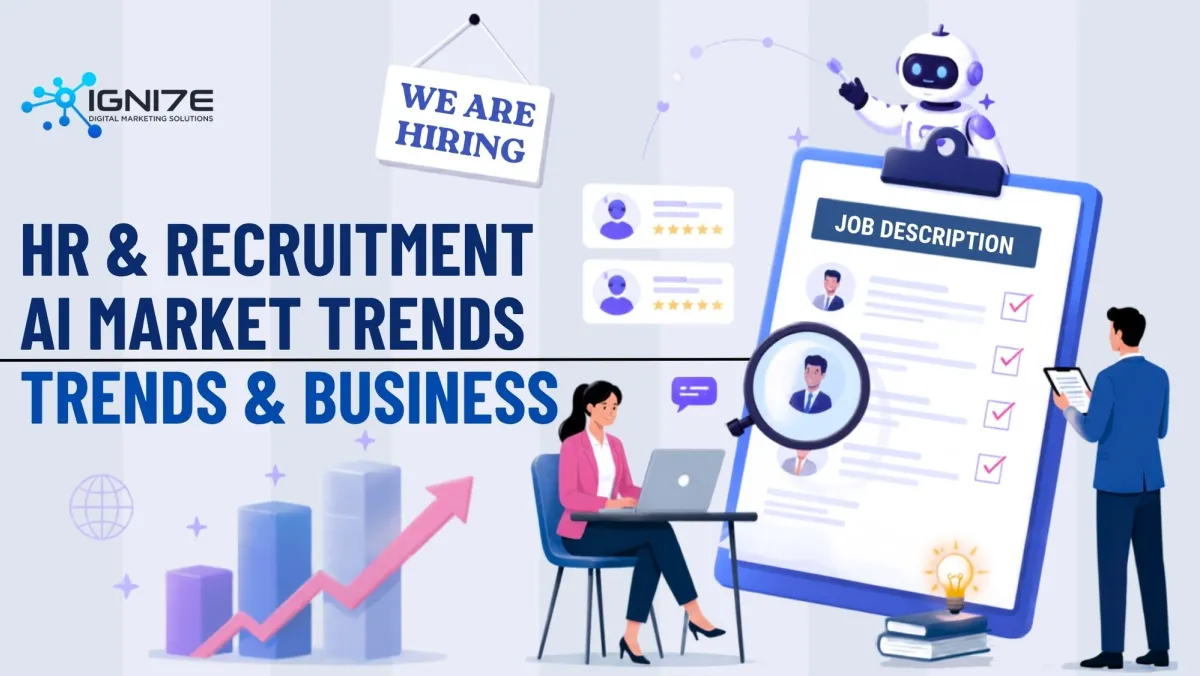
Japan’s HR and recruitment sector is rapidly embracing AI. While AI was initially introduced mainly to improve recruitment efficiency, the emergence of generative AI and AI agents has expanded its role to supporting HR operations as a whole. Today, AI is increasingly used for talent analytics, performance evaluation support, internal inquiry management, and many other HR functions, with new applications continuing to emerge each year.
This article explores the current state of AI adoption in Japan’s HR and recruitment market, the latest industry trends, and the business opportunities available to overseas companies.
Japan’s AI Market for HR and Recruitment: An Overview
In Japan’s HR and recruitment sector, AI has evolved beyond a tool for streamlining administrative tasks into an advanced solution that supports decision-making across the entire HR function. To better understand the market, let’s first look at the fundamentals of AI adoption in HR and recruitment, as well as the factors driving its growing importance in Japan.
What Is AI Adoption in HR and Recruitment?
AI adoption in HR and recruitment refers to the use of artificial intelligence to improve the efficiency and sophistication of recruitment activities and HR operations. Common applications include resume screening, candidate matching, AI-powered interviews, and generating recruitment outreach emails.
Although AI was originally introduced to streamline recruitment processes, its scope has expanded significantly in recent years to encompass the entire HR function. While traditional HR systems were primarily designed to manage information and improve operational efficiency, AI offers the additional ability to analyze data, generate forecasts, and support decision-making.
Why Japan’s AI Market for HR and Recruitment Is Gaining Attention
The biggest driver behind AI adoption in Japan’s HR and recruitment sector is the country’s severe labor shortage. As the working-age population continues to decline due to a low birth rate and an aging population, companies are facing increasingly intense competition for talent and greater difficulty securing qualified employees. As a result, organizations are looking for ways to conduct recruitment more efficiently with limited resources.
Beyond recruitment, improving productivity across HR departments has also become a major challenge. HR professionals often handle a broad range of responsibilities—including recruitment, labor management, performance evaluations, and employee inquiries—making workload reduction an increasingly important priority. At the same time, the widespread availability of generative AI has lowered the barriers to adoption, allowing AI to spread beyond a limited number of early adopters to a much broader range of companies.
How AI Adoption Differs from Overseas Markets
In overseas markets, particularly the United States, AI has been adopted in HR and recruitment earlier than in Japan. Today, AI is already integrated into many HR functions, including candidate matching, interview support, and talent management. Using AI to maximize recruitment speed and operational efficiency has become standard practice.
Japan, however, has generally taken a more cautious approach to AI adoption. One reason is the strong emphasis placed on fairness and transparency in recruitment and HR evaluations. There are also concerns about AI functioning as a "black box" in decision-making, as well as heightened awareness of personal data protection. In addition, adapting AI to the nuances of the Japanese language and Japan’s unique business practices remains a significant implementation challenge.
Size and Growth Potential of Japan’s AI Market for HR and Recruitment
Japan’s AI market for HR and recruitment continues to grow steadily, driven by ongoing labor shortages and digital transformation (DX). More recently, the emergence of generative AI and AI agents has further accelerated market interest, making it one of the most promising growth sectors for the future. The section below examines the current market size, key growth areas, and future outlook.
Current Market Size
Japan’s AI market for HR and recruitment is still rarely classified as an independent market segment. However, it continues to expand alongside the growth of HR management systems (HR Tech), applicant tracking systems, and workforce management systems. As the overall HR technology market grows, demand for AI-powered solutions has risen considerably.
Japan’s HR Tech market reached USD 2.16 billion in 2025 and is projected to grow to USD 3.93 billion by 2034, indicating stable long-term growth. The HR Tech market encompasses a wide range of solutions, including recruitment management, payroll, talent management, and performance evaluation. Within this broader market, advanced solutions powered by AI and machine learning have become increasingly prominent in recent years.
AI Adoption by Company Size
AI adoption in Japan’s HR and recruitment market also varies considerably by company size. Large enterprises have generally led adoption, supported by larger IT budgets, dedicated digital transformation (DX) teams, and established HR technology infrastructure. These organizations are more likely to deploy AI across multiple HR functions, including recruitment, workforce analytics, talent management, and employee support.
Mid-sized companies are increasingly adopting generative AI to improve recruitment efficiency and reduce administrative workloads. Rather than investing in highly customized AI platforms, many are implementing cloud-based solutions and AI features integrated into existing HR systems to automate tasks such as job description creation, interview scheduling, and internal HR support.
For SMEs, adoption has traditionally been slower due to limited budgets and fewer in-house technical resources. However, the widespread availability of affordable generative AI tools has significantly lowered the barriers to entry. Many smaller businesses are beginning with general-purpose AI applications before expanding into more specialized HR use cases. While larger organizations still demonstrate higher overall adoption rates, recent research suggests that generative AI is spreading relatively quickly across companies of all sizes, narrowing the gap between large enterprises and SMEs. Continued adoption, however, remains closely tied to a company's level of digital maturity and existing technology infrastructure.
Fastest-Growing Segments
Among AI applications in HR and recruitment, recruitment support and talent analytics are expected to experience the strongest growth. Demand is rising for tools designed to improve recruitment through AI-powered interviews and more accurate candidate matching. For many organizations, increasing recruitment efficiency remains a top priority.
AI is also attracting growing interest in areas related to HR decision-making, including workforce analytics, employee turnover prediction, and workforce allocation optimization. One of the market’s defining characteristics is the shift from using AI simply to reduce administrative workloads to leveraging it as a tool that supports HR decision-making.
Industries Driving AI Adoption
Demand for AI-powered HR and recruitment solutions is growing across a wide range of industries in Japan. However, adoption is particularly strong in sectors facing persistent labor shortages, high-volume hiring, or complex workforce management needs.
The IT and technology sector remains one of the leading adopters, using AI to source specialized talent, automate candidate screening, and improve recruitment efficiency in an increasingly competitive labor market. Manufacturing companies are also investing in AI-driven HR solutions to support workforce planning and recruitment as they address an aging workforce and ongoing labor shortages.
Healthcare organizations are adopting AI to help address chronic staffing shortages by improving recruitment workflows and workforce planning. Meanwhile, staffing and recruitment firms are using AI-powered candidate matching, resume screening, and generative AI to increase recruiter productivity and reduce administrative workloads.
Future Growth Outlook
As labor shortages persist and talent competition continues to intensify, AI will become increasingly essential for HR and recruitment teams seeking to achieve better results with limited resources. Going forward, demand is expected to expand beyond basic workflow efficiency to include AI agents that automate HR operations and support more advanced workforce strategy decisions. With substantial room for further adoption, Japan’s AI market for HR and recruitment represents an important growth opportunity for both domestic companies and overseas businesses looking to enter the Japanese market.
The Evolution of Japan’s AI Market for HR and Recruitment
Advanced AI adoption was not present from the outset in Japan’s HR and recruitment sector. Before generative AI and AI agents gained widespread attention, digitalizing HR operations was the primary focus. The following sections trace the development of AI adoption in Japan’s HR and recruitment market over time.
The 2010s: HR System Digitalization Takes Center Stage
During the 2010s, an increasing number of companies transitioned from managing HR information using paper records and spreadsheets to adopting HR management systems, attendance management systems, and applicant tracking systems. The primary objectives were improving operational efficiency and centralizing information management, while advanced AI applications remained uncommon.
The priority, then, was building systems that reduced the workload of HR departments. Rather than relying on AI for analytics or forecasting, companies focused on replacing manual, paper-based operations with digital processes. The HR AI market seen today is built upon the HR Tech foundation established during the 2010s.
2018–2021: Recruitment AI Begins to Gain Momentum
Around 2018, AI-powered recruitment support services began attracting attention in Japan. The shift was fueled by worsening labor shortages and increasingly fierce talent competition. Companies needed to manage large volumes of applicants with limited HR staff, making recruitment efficiency a pressing challenge.
As a result, solutions emerged that analyzed applicant data to visualize candidate suitability and partially automate interviews. However, concerns surrounding the accuracy and fairness of AI-driven decisions meant that adoption remained largely limited to large corporations and other early adopters.
Current HR and Recruitment AI Trends (2022–2025)
Since 2022, AI adoption in Japan’s HR and recruitment sector has entered a major new phase. While AI had previously been used mainly to improve recruitment efficiency, generative AI has significantly expanded its role. The following sections highlight the major trends shaping the market today.
Generative AI Rapidly Expands HR Applications
The most significant development in recent years has been the rapid expansion of AI applications across HR operations. As generative AI has become easier to use in day-to-day work, it has improved the efficiency of tasks such as:
- Creating job descriptions
- Drafting recruitment outreach emails
- Generating interview questions
- Creating internal FAQs
- Automating responses to employee inquiries
Because generative AI can now be adopted without implementing specialized HR software, the barriers to introducing AI into HR operations have begun to decline significantly.
AI Expands Beyond Recruitment into the Entire HR Function
In recent years, the objective of AI adoption itself has shifted, with more organizations using AI to transform HR operations across entire departments and enhance organizational management.
One notable change is the broader range of companies implementing AI. Previously, adoption was concentrated among large enterprises with high recruitment volumes and other early adopters. However, the widespread availability of generative AI has made implementation much more accessible for mid-sized companies. At the same time, general-purpose AI services and tools that can be used across entire departments are becoming increasingly common. Rather than being viewed simply as productivity tools, AI is increasingly being positioned as infrastructure that supports organization-wide productivity.
Candidate Experience and Employer Branding
As talent competition intensifies in Japan, companies are increasingly using AI not only to improve operational efficiency but also to enhance the candidate experience and strengthen their employer brand. In a labor market where skilled candidates often have multiple employment options, providing a smooth and responsive recruitment process has become an important competitive advantage.
AI-powered tools enable companies to communicate with candidates more quickly and consistently throughout the hiring process. Chatbots and generative AI can answer frequently asked questions, provide application updates, and deliver timely responses outside normal business hours. AI is also streamlining interview scheduling by automatically coordinating calendars and sending reminders, reducing administrative work for HR teams while making the process more convenient for candidates.
Generative AI is also being used to create more personalized interactions. For example, recruiters can quickly tailor outreach emails, job descriptions, and interview questions to match individual candidates and specific roles better. These capabilities help create a more engaging recruitment experience while maintaining consistency in employer messaging.
New Challenges Emerge Alongside AI Adoption
As AI adoption expands throughout HR and recruitment, new challenges are also becoming more apparent. Because HR professionals make important decisions involving people, AI implementation requires even greater caution than in many other business functions. One major concern is ensuring transparency in AI-driven decision-making. If it is unclear how candidate evaluations or talent analytics results are generated, it can undermine trust and confidence in the system.
There is also the risk that biased training data may produce biased AI decisions. Given Japan’s strong emphasis on personal data protection, HR data must be handled with particular care. Generative AI also presents challenges related to information leakage and inaccurate outputs. Going forward, establishing robust AI governance and operational guidelines will become increasingly important.
AI Tool Trends in Japan’s HR and Recruitment Market
The rise of generative AI and AI agents has diversified the types of AI tools being adopted by HR departments. The section below introduces the key categories of tools currently attracting attention.
AI Tools for Streamlining Recruitment
The earliest and fastest-growing segment of Japan’s HR and recruitment AI market has been AI tools designed to streamline recruitment operations. Recruitment involves numerous tasks, including creating job postings, managing applicants, screening resumes, scheduling interviews, and communicating with candidates. The need to improve efficiency across these processes has driven AI adoption in recruitment operations.
Representative solutions include SHaiN, which automates first-round interviews through conversational AI; AI Interviewer, which conducts interviews using generative AI-powered digital avatars; and harutaka, which combines recorded video interviews with AI analysis to improve both interview quality and efficiency. There is also a growing number of solutions like Sonar ATS, which integrate AI capabilities into applicant tracking systems to centralize job posting creation, applicant management, and resume evaluation. A defining trend is the growing adoption of tools that improve the entire recruitment process, including standardizing evaluation criteria and enhancing the candidate experience.
HR Support Tools Powered by Generative AI
Generative AI-powered HR tools have also become increasingly prominent in recent years. Because generative AI can be applied flexibly across a wide variety of tasks, it is particularly well-suited to HR operations. Typical use cases include drafting job descriptions, writing recruitment outreach emails, generating interview questions, creating internal FAQs, and preparing draft performance evaluation comments.
Specialized HR solutions have also emerged. For example, Talent Palette provides integrated management of recruitment, employee placement, and talent development while offering AI-powered talent analytics and interview summarization features. One notable characteristic of the market is the simultaneous expansion of both dedicated HR platforms and general-purpose generative AI tools.
The Evolution Toward AI Agent-Based HR Tools
Another major growth trend is the emergence of AI agent-based HR tools. While generative AI primarily assists users with tasks based on their instructions, AI agents can autonomously carry out work toward predefined objectives.
Within HR and recruitment, AI agents are evolving to automatically handle routine tasks previously performed by HR staff, including interview scheduling, candidate inquiries, and recruitment process tracking. In the future, these systems are expected to go beyond simple task automation by serving as "digital HR assistants" capable of recommending recruitment strategies and optimal workforce allocation based on talent data. Over the medium to long term, AI agent-based solutions are expected to become one of the key growth areas driving Japan’s HR AI market.
AI Adoption in HR and Recruitment Among Japanese Companies
Understanding how Japanese companies are applying AI in their HR and recruitment operations is essential to understanding the market’s growth potential and emerging trends. In recent years, the widespread adoption of AI has lowered the barriers to implementation, making it an increasingly practical tool for everyday HR operations. Below are some representative examples of how Japanese companies are putting AI into practice.
Examples of Companies Using AI for Recruitment
For many Japanese companies, AI adoption began in the recruitment function. For example, major beverage manufacturer Kirin Holdings Company Ltd introduced AI Interviewer after an increase in applicants caused first-round interviews to become a bottleneck in its hiring process. The system generates interview questions based on each applicant’s entry sheet and evaluates candidates according to predefined criteria. By implementing AI Interviewer, the company has enabled 24-hour interview availability while improving recruitment efficiency, increasing evaluation transparency, and reducing hiring costs.
Some companies have also begun using AI to analyze recordings of group discussions to help standardize candidate evaluations. In these cases, AI is not intended to replace human judgment but rather to support interviewers in their evaluations. Given Japan’s strong emphasis on fairness and accountability in recruitment, this type of decision-support application is expected to become increasingly common.
Examples of Companies Using Generative AI for HR Operations
In recent years, more companies have begun using generative AI not only for recruitment but across their entire HR departments. One notable example is LINE Yahoo Corporation. The company has promoted the use of generative AI across the organization and has begun implementing AI extensively within its HR and administrative functions. Current applications include organizing data for recruitment strategy, supporting interview training, and automating interview scheduling to reduce workloads across the department significantly. One defining aspect of its approach is that AI-generated outputs are used strictly as reference material, while final decisions remain the responsibility of human employees.
HR and Recruitment AI Trends to Watch Beyond 2026
From 2026 onward, AI is expected to play an even more advanced role, potentially transforming the way HR departments operate. In particular, AI agent-driven automation and more sophisticated decision support are emerging as key trends. The section below highlights the developments expected to shape the market in the years ahead.
Autonomous HR Operations Through AI Agents
The most significant trend is the rise of autonomous workflows powered by AI agents. Until now, AI has primarily been used to assist HR professionals with tasks assigned by users. AI agents, however, differ fundamentally in that they can autonomously carry out multiple tasks based on predefined objectives.
In HR and recruitment, it is becoming increasingly realistic for AI agents to automatically handle routine tasks such as scheduling interviews with candidates and managing recruitment progress. As HR professionals are freed from repetitive administrative work and able to focus on more strategic responsibilities, AI adoption across HR operations is expected to accelerate even further.
More Advanced AI-Driven Decision Support
Although AI is already being used for workforce analytics and employee turnover prediction, organizations are expected to demand even more advanced analytical and recommendation capabilities in the future.
AI may increasingly support HR strategy by recommending ideal candidate profiles, optimizing workforce allocation, and proposing employee development plans. Traditionally, many HR decisions have relied on the experience and intuition of HR professionals. As organizations adopt more data-driven decision-making with AI, greater accuracy in HR decisions can be expected. At the same time, questions remain about how much authority should be entrusted to AI for critical HR decisions, making the development of governance frameworks and operational guidelines increasingly important.
Expanding AI Across the Entire Employee Lifecycle
Optimizing recruitment alone is unlikely to improve business performance if companies are unable to retain and develop their employees. As a result, AI’s role is expected to expand into broader talent management.
Potential application areas include:
- Onboarding
- Training
- Skills analysis
- Career development
- Performance evaluation
- Workforce reassignment
- Employee retention
AI is also expected to make personalized HR a reality by providing tailored support based on data for each employee. Going forward, Japan’s HR and recruitment AI market is likely to evolve into one that supports organization-wide talent strategies.
Key Considerations for Overseas Companies Entering Japan’s HR and Recruitment AI Market
Japan’s HR and recruitment AI market may appear highly attractive based on its size and growth potential. However, overseas companies looking to enter the market must first understand Japan’s unique business practices and implementation environment.
Market Entry Barriers Unique to Japan
One of the most important considerations for overseas companies is the set of challenges unique to the Japanese market. A defining characteristic is Japan’s cautious approach to decision-making in HR and recruitment. Because hiring and HR evaluations are considered critical business functions, companies place strong emphasis on transparency, often questioning whether AI-driven decisions are truly fair and what criteria are being used to reach them.
Another key challenge is the quality of Japanese language support. HR operations frequently involve subtle language and nuanced communication that AI systems designed primarily for English-speaking users may not fully understand. Japan’s distinctive employment practices and strong emphasis on personal data protection must also be taken into account. Rather than introducing solutions that have succeeded overseas without modification, companies need to localize their products for the Japanese market while building trust in their reliability.
High-Growth Opportunities
Despite these entry barriers, Japan’s HR and recruitment market offers significant growth opportunities. Ongoing labor shortages and companies’ increasing focus on improving productivity are expected to sustain demand for AI tools that streamline recruitment processes.
The greatest growth potential lies in AI-powered recruitment solutions, generative AI for HR operations, and AI agent-based HR solutions. Many Japanese companies are still in the early stages of AI adoption, leaving more room for growth than in many overseas markets. Although Japanese companies tend to adopt new technologies cautiously, they are also more likely to continue using solutions once their value has been proven. As a result, providers that deliver reliable, high-quality solutions have strong potential to establish long-term business opportunities.
Conclusion: Japan’s HR and Recruitment AI Market Is Evolving from Operational Efficiency to Decision Support
AI adoption in Japan’s HR and recruitment market continues to expand steadily, driven by labor shortages and ongoing digital transformation (DX). In the past, AI was used primarily to streamline recruitment tasks such as resume screening and interview scheduling. Today, however, it is evolving into a technology that supports the entire HR function. More companies are incorporating AI into everyday activities such as drafting job descriptions, creating recruitment outreach emails, and assisting with performance evaluation comments. At the same time, AI is increasingly being used to support HR decision-making through applications such as workforce allocation optimization and employee turnover prediction.
At the same time, Japan’s cautious approach to AI adoption remains one of the market’s defining characteristics. Rather than relying entirely on AI-generated decisions, Japanese companies generally emphasize human oversight and final decision-making, which constitutes an important distinction from many overseas markets and a key consideration for companies seeking to enter Japan. Looking ahead, AI agent-driven automation and integrated HR solutions that support the entire employee lifecycle are expected to continue evolving. Japan’s HR and recruitment AI market still offers considerable growth potential, making it an attractive opportunity for overseas companies. Success in the Japanese market will depend on delivering solutions that align with the operational culture and business needs of Japanese organizations.
Frequently Asked Questions

AI adoption in HR and recruitment refers to the use of artificial intelligence to improve the efficiency and sophistication of recruitment activities and HR operations. Common applications include resume screening, candidate matching, and AI-powered interviews. Going forward, AI is expected to play an increasingly important role not only in improving operational efficiency but also in supporting HR decision-making.
The primary reason is Japan’s declining working-age population and worsening labor shortage caused by its low birth rate and aging population. Companies must manage recruitment and HR operations with limited personnel, making AI an attractive solution for reducing workloads. Ongoing digital transformation (DX) initiatives and the widespread adoption of generative AI have also lowered the barriers to AI implementation, further driving market growth.
Within recruitment, AI-powered interviews, candidate matching, and applicant communication automation are becoming increasingly common. Generative AI tools that assist with creating job descriptions, drafting recruitment outreach emails, and handling FAQs are also seeing growing adoption. Looking ahead, AI agents capable of autonomously supporting HR operations are expected to become one of the market’s most significant trends.
AI adoption in Japan initially focused on improving recruitment efficiency before expanding across the broader HR function. Today, AI is used in a wide variety of HR activities, including responding to internal employee inquiries, assisting with performance evaluation comments, creating training materials, conducting workforce analytics, predicting employee turnover, and optimizing workforce allocation.
The strongest growth is expected in AI agent-based solutions and AI applications that support HR decision-making, including workforce analytics and workforce allocation optimization. Compared with many overseas markets, Japan still offers considerable room for expansion, making it a market with strong long-term growth potential.
AI agents are designed not only to respond to instructions from HR professionals but also to carry out tasks based on predefined objectives autonomously. They are expected to automate many routine administrative tasks that have traditionally been handled manually. By leveraging AI agents, HR professionals can reduce the burden of repetitive work and focus more on higher-value activities, such as recruitment strategy and organizational development.
EN-JA bilingual project manager with experience leading Japanese translation and localization projects. Oversees SEO-focused content quality, production, and coordination.