Japan's Startup Ecosystem: Where It Stands, Where It's Headed, and How It Compares Globally

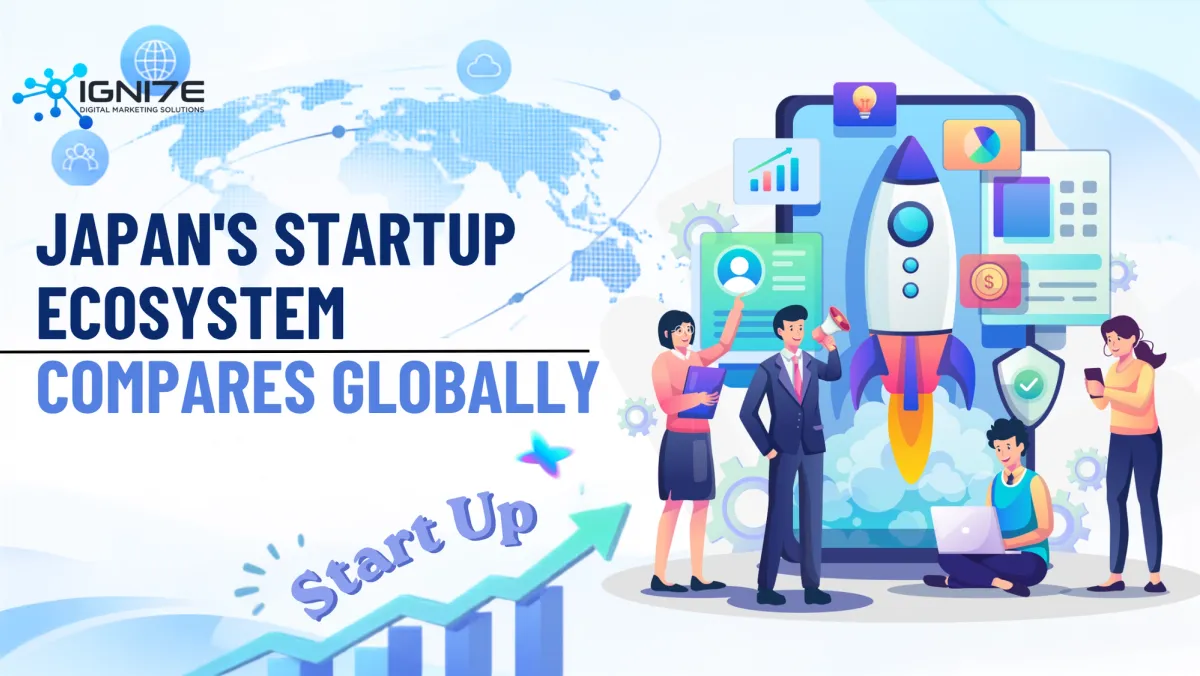
Japan has traditionally been known for an industrial structure built around large corporations. In recent years, though, startups have been drawing growing attention as engines of economic growth and innovation. One term in particular has become a focal point: the "startup ecosystem." Government-led support measures and regional initiatives have been picking up pace, and the environment surrounding startups is shifting rapidly. This article looks at where Japan's startup ecosystem stands today, how it compares with other countries, and where it's headed.
Understanding Japan's Startup Ecosystem
Growing a startup takes more than a good idea and a capable founder—it also depends on the investment environment, talent pool, and research institutions that support the company along the way. Japan has spent recent years building out mechanisms to support startups, and the phrase "startup ecosystem" has become a common part of that conversation. Let's start with the basic concept and what defines it.
Defining the Startup Ecosystem
A startup ecosystem is a network in which startups sit at the center, while investors, universities, research institutions, large corporations, and government bodies interact to generate innovation. "Ecosystem" is borrowed from biology, but in a business context, it describes an environment where a diverse set of players work together to create value. Growing a startup and scaling its business requires support on multiple fronts—raising capital, hiring talent, developing technology, and building sales channels, to name a few. When these pieces connect, the result is an environment where new companies and new technologies are more likely to take root.
The Key Players Behind Japan's Startup Ecosystem
Startups are the core of Japan's startup ecosystem, but the players around them matter just as much. Venture capital firms and financial institutions supply the capital startups need to grow. Universities and research institutions produce the research findings and technology seeds that often give rise to university-launched startups. Large corporations, meanwhile, are pursuing collaboration with startups through open innovation and corporate venture capital (CVC).
National and local governments play an equally essential role, shaping the environment for entrepreneurship through subsidies, deregulation, and dedicated startup support programs.
Why Japan's Startup Ecosystem Is Gaining Attention
Startups are increasingly seen as a new engine for economic growth. With Japan's population aging and shrinking, creating new industries and technologies has become essential to sustaining economic growth. Against this backdrop, the government rolled out its "Five-Year Plan for Startup Development" in 2022, aiming to expand investment in startups and build up talent. The fact that the government has made startups a central pillar of its growth strategy—and is working to strengthen the ecosystem as a whole—is one of the main reasons the topic has drawn so much interest.
Japan also brings real strengths to the table: universities and research institutions with strong technical capabilities, along with a large base of companies with advanced technology. Because these resources have the potential to fuel innovation, Japan has been catching the eye of investors and companies both at home and abroad.
Where Japan's Startup Ecosystem Stands Today
Japan's startup ecosystem has changed considerably over the past several years, with expanded government support and a steadily improving investment environment.
Government-Led Ecosystem Building Is Gaining Momentum
Government-driven support for startups has moved into full gear in Japan in recent years. One especially notable effort is the "Startup Ecosystem Global Hub Cities" initiative, spearheaded by the Cabinet Office and the Ministry of Economy, Trade and Industry. Universities, local governments, companies, and investors are working together to strengthen startup support in each region. With the country as a whole treating startups as a key driver of economic growth, support policies and programs are expected to keep expanding.
Startup Investment and Fundraising Options Are Growing
Japan's startup investment market has grown substantially over the past decade. Venture capital investment has kept climbing, and CVC activity from government-affiliated funds and large corporations has picked up as well. Early-stage companies used to struggle to secure enough funding, but a much wider range of fundraising options has opened up in recent years. The fact that startups can now raise capital more easily at each stage of growth marks an important shift in Japan's ecosystem.
The J-Startup Program
The J-Startup Program is one of the clearest signals of government backing available to founders in Japan. Launched by METI in 2018, it's a government-endorsed initiative that combines public and private support to boost a select group of startups, rather than being open to everyone.
Selected companies get priority access to more than 500 corporate partners, along with fast-tracked regulatory approvals—both valuable in a market where trust and introductions often matter more than cold outreach. Selection also brings preferential treatment in government subsidies and procurement opportunities, plus support from the "J-Startup Supporters" network of large corporations, VCs, and accelerators. The program has supported hundreds of startups, helping many reach major milestones and gain international recognition, and has put startups on the global stage, including bringing 30 Japanese companies to CES 2024 in Las Vegas through a dedicated J-Startup Pavilion.
For foreign founders specifically, the biggest draw isn't funding—it's legitimacy. Getting into J-Startup provides instant credibility, access to mentors and investors, and a fast track into Japan's ecosystem, and the program tends to favor high-growth, globally scalable startups in areas like AI, biotech, fintech, SaaS, IoT, and green tech—especially founders who need a trust signal to win partners and customers in Japan.
More Unicorns and Large Funding Rounds
Japan has seen a growing number of "unicorns"—unlisted companies valued at $1 billion or more—in recent years. The number of startups closing large funding rounds, ranging from several billion to tens of billions of yen, has also risen. Companies used to run out of money partway through expansion, but these days, quite a few are pulling in substantial funding from investors both in Japan and abroad as they look to expand into global markets. Japan's startup ecosystem is still a work in progress, but the foundation for producing growth companies keeps getting stronger.
Three Challenges Facing Japan's Startup Ecosystem
Japan's startup ecosystem is growing, but it still faces challenges compared with more advanced ecosystems abroad.
1. Less Risk Capital Available Than in the West
Startup investment in Japan is on the rise, but the pool of risk capital is still smaller than in Western countries. In the U.S. especially, companies with strong growth potential often attract huge sums of investment, making it easier to fund large-scale R&D and overseas expansion. In Japan, by contrast, investors tend to be more cautious, and short-term profitability often gets weighed more heavily than long-term potential. As a result, some fast-growing startups struggle to raise enough capital. Government support and a growing VC market are helping close the gap, but a bigger supply of risk capital is still needed to produce companies that can compete globally.
2. Few Startups Are Built with the Global Market in Mind
Japan's domestic market is large enough that companies can find meaningful growth without looking abroad, so most startups focus mainly on the domestic market. Startups on the world stage, however, typically build their businesses with the global market in view from day one, since targeting a bigger overseas market opens the door to bigger growth. For Japanese startups to become more competitive internationally, they'll need to build stronger ties with overseas investors and companies while growing the number of firms that can compete globally.
3. Talent Acquisition and Turnover Remain Limited
Startups need strong management talent, engineers, and researchers to grow. Still, in Japan, the pull toward large corporations and public institutions remains strong, and relatively few people choose to move to a startup or start a company of their own. On top of that, Japan hasn't developed the kind of talent circulation seen in the U.S., where experience at a startup often feeds into the next venture or into investing. That leaves growth companies short on the talent they need, which in turn slows the growth of the ecosystem as a whole.
The loosening of restrictions on side jobs and the rise of remote work have boosted talent mobility somewhat in recent years. Even so, more work is needed to build an environment that encourages people to leap startups and makes it easier for people with entrepreneurial experience to put that experience to use.
How Japan's Startup Ecosystem Compares Internationally
Some regions of the world have built far more mature startup ecosystems than Japan's, with the U.S. and Europe in particular producing large numbers of unicorns and global companies. Here's how Japan's ecosystem stacks up.
Japan vs. the U.S.
The U.S. is the classic example of a thriving startup ecosystem, and Silicon Valley in particular is known as one of the world's leading innovation hubs, drawing startups and investors from all over.
The biggest differences between Japan and the U.S. come down to the fundraising environment and entrepreneurial culture. In the U.S., venture capital investment is highly active, with large sums flowing to companies based on their future growth potential. There's also a much greater social tolerance for entrepreneurial risk and failure, which makes it easier for founders to emerge. In Japan, investment has been growing, but there's still a significant gap in the scale of funding available. Japan also holds onto a culture that places a high value on stable employment, so the share of people choosing to start a business is nowhere near as high as in the U.S.
Why Japan Lags Behind Silicon Valley
Japan's startup ecosystem is generally seen as trailing Silicon Valley mainly because of differences in funding scale, talent mobility, and entrepreneurial culture. In Silicon Valley, where large funding rounds and talent moves happen as a matter of routine, universities and research institutions work closely together, creating fertile ground for new technologies and business models.
In Japan, by comparison, the systems for turning strong technology and research into viable businesses—and the infrastructure to support going global—are often still underdeveloped. That said, things are changing, thanks to a growing number of university-launched startups and a steadily improving investment climate, putting Japan in something of a transitional period as it works to close the gap with Silicon Valley.
Japan vs. Europe
Europe has also been pushing hard on startup support. Countries like the U.K., Germany, and France have particularly active startup investment scenes and well-developed government support systems, and access to the large EU market gives them an added advantage.
One key difference from Japan is a stronger focus on going global. Because European startups often need to operate across multiple languages and markets, they tend to build their businesses with international expansion in mind right from the start. That makes it more likely they'll grow into companies that can compete on the global stage.
Japan vs. Asia's Other Hubs (Singapore, South Korea)
Japan isn't the only serious startup hub in Asia. Globally, Japan ranks 15th by number of unicorns, trailing Asian peers including China, India, South Korea, and Singapore. However, Greater Tokyo still leads Asian cities in deal volume, with Singapore and Seoul gaining ground in recent years.
Singapore's edge is positioning: a central location, business-friendly regulation, and low taxes have made it the easiest place in Asia to set up and run a company, geared toward founders targeting Southeast Asia from day one.
South Korea offers a different picture. Its ecosystem ranks eighth globally by Startup Genome, with Seoul competing directly with Beijing, Tokyo, and Singapore for regional prominence. Still, it's also heavily state-driven: the government allocated roughly $2.3 billion in startup support for 2025 alone, with cumulative deployment topping $10 billion over five years. That reliance has costs—policy inconsistency has limited Korea's ability to position itself as a predictable venture hub, especially as Singapore, Japan, and Taiwan sharpen their own regulatory clarity.
Japan lands in between: less nimble than Singapore, less state-dependent than South Korea, but backed by a deep domestic market, strong R&D base, and manufacturing ecosystem neither rival can match.
How Japan's Startup Ecosystem Evolved Through 2025
Here's a look back at how today's startup ecosystem took shape.
2018–2022: Startup Support Policy Picks Up Steam
Starting around 2018, Japan began treating startups as a genuinely important part of its economic growth strategy. Venture support programs had existed before, but from 2018 onward, local governments began pursuing more systematic initiatives.
One symbolic example was the Cabinet Office's selection of "Startup Ecosystem Global Hub Cities," aimed at building an environment—through collaboration among universities, research institutions, large corporations, and investors in each region—capable of producing globally competitive startups. The initiative initially centered on major cities like Tokyo, Osaka, and Fukuoka, before later expanding to Sapporo/Hokkaido, Sendai, Chubu, Hiroshima, and other regions.
2023–2025: Growth Accelerates Under the Five-Year Plan for Startup Development
From 2023 onward, Japan's startup ecosystem entered a major growth phase, driven largely by the "Five-Year Plan for Startup Development" that the government announced in 2022. The government designated 2022 as the "first year of startup creation" and made expanding startup investment, developing entrepreneurs, and boosting talent mobility its key priorities. Specific goals included growing startup investment from roughly 800 billion yen to around 10 trillion yen over five years, along with longer-term targets of producing 100 unicorns and 100,000 startups. As the plan translated into action—building out talent networks, strengthening funding sources, and promoting open innovation—interest in startups grew across Japan, and the ecosystem became noticeably more active. The 2023–2025 period, in short, was a time when Japan's startup ecosystem grew in both scale and quality.
The Latest Trends in Japan's Startup Ecosystem as of 2026
Japan's startup ecosystem is entering a new phase of growth, fueled by policy support and a steadily improving investment climate. Here's a look at the trends shaping the landscape in 2026.
Rising Investment in AI and Generative AI Startups
AI and generative AI have been gaining the most attention in recent years. Riding the global generative AI wave, investment in AI-related startups has been surging in Japan too.
Generative AI isn't just about generating text and images—it's expected to find applications across industries as varied as manufacturing, healthcare, finance, and logistics. New startups keep emerging that offer AI-driven efficiency tools and business solutions for companies. AI looks set to remain one of the biggest themes driving startup investment in Japan for years to come.
Deep Tech Is Drawing More Attention
AI isn't the only field gaining traction: deep tech is too. Deep tech refers to ventures built around commercializing advanced research coming out of universities and research institutions, with semiconductors, quantum technology, biotech, and space development as leading examples.
Japan's strengths in R&D and technical expertise make it a natural fit for deep tech. Overseas investors have high expectations for Japan's technical capabilities, and deep tech is increasingly seen as a growth area that will help underpin the startup ecosystem going forward.
University-Launched Startups Are on the Rise
University-launched startups have been growing at a faster clip in Japan in recent years, thanks to stronger government support and a shift in how universities approach their role. Research findings used to end up mostly as papers or patents, but more of that research is now being commercialized, particularly in science, engineering, and medical fields. A growing number of universities are also setting up incubation facilities and entrepreneurship programs on campus, making it easier for researchers and students to start a company.
Japan's Startup Ecosystem, Region by Region
Startup ecosystems are taking shape all across Japan, with each region building on its own particular strengths.
The Greater Tokyo Area (Tokyo and Tsukuba)
Greater Tokyo is home to Japan's largest startup ecosystem. Tokyo especially has become the country's innovation hub, drawing a dense concentration of startups, venture capital firms, large corporations, and universities. The Tokyo Metropolitan Government has been driving support programs like "Global Innovation with STARTUPS (GIS)" and ramping up efforts to attract startups and investors from Japan and abroad.
Tsukuba, in Ibaraki Prefecture, is known as one of Japan's premier research and academic cities. With research institutions like the National Institute of Advanced Industrial Science and Technology and the University of Tsukuba based there, it's become an active center for deep tech startups. Tokyo's financial muscle, paired with Tsukuba's R&D depth, is helping strengthen the ecosystem across the wider Kanto region.
The Kansai Region (Osaka, Kyoto, and Kobe)
In Kansai, ecosystem-building is centered on Osaka, Kyoto, and Kobe. With its long history of universities and research institutions, Kansai has particular strength in university-launched startups. Kyoto, home to Kyoto University and other research institutions, has produced numerous startups in life sciences and advanced technology.
Osaka, with its dense concentration of large corporations, has a thriving open innovation scene, backed by systems that support collaboration between startups and big companies. Kobe, meanwhile, is advancing support for bio and healthcare startups centered around its medical industry cluster. By tapping into local resources and driving industry-academia-government collaboration through groups like the Kansai Startup Ecosystem Consortium, the region has been raising its profile as one of Japan's leading startup hubs.
Other Regions
Beyond Tokyo and Kansai, other regions are advancing startup support built around their own strengths. Fukuoka has branded itself a "Startup City" and has proactively pursued deregulation and entrepreneurship support programs. Making the most of its proximity to continental Asia, it's also investing heavily in exchanges with overseas startups and support for international expansion. In Hokkaido, startups working in agtech, food tech, and renewable energy—fields that draw on the region's vast land and rich natural resources—are attracting attention.
In Okinawa, initiatives centered on the "Okinawa Startup Ecosystem Consortium" are underway to turn the prefecture into a business hub linking Japan with the rest of Asia. Startup support there focuses mainly on tourism, healthcare, and IT, with hopes for international collaboration that leverages the region's geographic position. Japan's startup ecosystem is starting to spread nationwide, with each region carving out its own growth path based on local strengths.
Future Trends for Japan's Startup Ecosystem
The landscape around Japan's startup ecosystem is expected to keep shifting significantly through 2030. Here are three trends worth watching.
A Bigger Ecosystem Behind Deep Tech
Growth in deep tech will be essential to the future of Japan's startup ecosystem. Fields like AI, semiconductors, biotech, and the space industry will play a major role in shaping international competitiveness. Deep tech ventures typically need a long runway and significant capital to reach commercialization, which is why building ecosystem-level support systems—rather than leaving individual companies to go it alone—will be so important.
Regional Startups Set to Grow Faster
Beyond major hubs like Tokyo and Kansai, startups from other regions are expected to gain a stronger presence in the years ahead. Universities, research institutions, and local governments in each region are teaming up to support initiatives aimed at solving local problems and boosting local industry. More companies are building on their region's particular strengths, and the approach—pairing regional revitalization with startup support—is drawing attention. With remote work now firmly established and more people relocating outside major cities, the number of startups aiming for global markets from outside Tokyo is expected to keep climbing.
Deeper Ties with, and More Interest in Attracting, Overseas Startups
Japan's startup ecosystem is expected to become increasingly global going forward. National and local governments are ramping up efforts to attract overseas companies and investors, with plans in the works to support entry into the Japanese market and build out international exchange programs.
Japanese companies are also picking up new technologies and business models through partnerships with overseas startups, and collaboration with players around the world will matter even more in fields like AI and deep tech. As Japan draws in more overseas startups and international joint research going forward, its startup ecosystem is expected to grow into a more diverse and competitive environment.
Conclusion: Japan's Startup Ecosystem Keeps Evolving Despite Its Challenges
Japan's startup ecosystem continues to grow steadily, driven by stronger government support, an improving investment environment, and a growing number of university-launched startups. National policies like the Five-Year Plan for Startup Development have added particular momentum in recent years, accelerating efforts to develop startups as a driving force behind Japan's economic growth. That said, plenty of challenges remain compared with the West. Further growth will hinge on building out the investment environment, developing talent, and deepening ties with other countries.
With its strong technical capabilities and R&D foundation, Japan remains an appealing market for companies from abroad, too. Opportunities for joint development with startups, open innovation, and investment continue to expand, and further ecosystem development is expected to open up new business opportunities down the road.
Frequently Asked Questions

A startup ecosystem is an environment or system in which investors, universities, research institutions, and other players work together around startup companies to create new businesses and drive innovation. By connecting fundraising, talent development, and R&D, it creates conditions that make it easier for startups to grow.
The main challenges facing Japan's startup ecosystem include a limited supply of risk capital and a shortage of companies founded with the global market in mind from the outset. The government has been making improvements, but further policy development and talent development will be needed to boost global competitiveness.
It comes down to differences in investment scale, the number of unicorn companies, and talent mobility. Silicon Valley draws entrepreneurs and investors from around the world, creating an environment where businesses can grow more easily. Japan still has ground to make up in terms of funding and entrepreneurial culture, but it's making progress in putting its strong technical and R&D capabilities to use.
Japan's strengths lie in its advanced technical capabilities and R&D foundation. Universities, research institutions, and large corporations are putting those strengths to work in fields like AI, robotics, and semiconductors. A solid industrial base, including manufacturing, also makes it easier for startups and large corporations to collaborate.
The Greater Tokyo area, centered on Tokyo and Tsukuba, and the Kansai region, centered on Osaka, Kyoto, and Kobe, are the leading hubs. Rather than being concentrated solely in Tokyo, ecosystem-building that draws on local strengths has also been picking up in places like Fukuoka, Hokkaido, and Okinawa in recent years.
Investment is expected to keep shifting toward AI and deep tech, alongside continued growth in university-launched startups. As collaboration with overseas startups and efforts to attract overseas investors gain momentum, Japan's competitiveness is expected to improve.
EN-JA bilingual project manager with experience leading Japanese translation and localization projects. Oversees SEO-focused content quality, production, and coordination.